The Bhutanese Leading the way.

The government has acknowledged the challenges faced by contractors due to recent increases in fuel and petroleum-based construction input prices, but says immediate price adjustment relief for all ongoing government projects is not legally feasible under the current procurement framework.
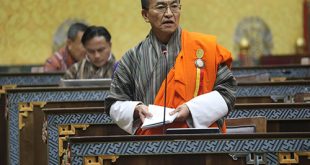
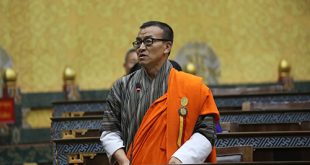
The clarification came in response to a question raised by Lamgong-Wangcha Member of Parliament (MP) Sonam Tashi, who sought to know whether the government would consider introducing cost adjustment or compensation mechanisms for ongoing government projects affected by extraordinary increases in fuel prices and petroleum-based construction materials.
The MP expressed concerns that rising costs could affect project viability, delay implementation, and have broader impacts on the construction sector and financial system.
Responding to the issue, the Ministry of Finance (MoF) said the Government recognizes the challenges faced by contractors due to recent increases in fuel and petroleum-based construction input prices arising from global geopolitical developments.
The ministry stated that it acknowledges concerns regarding project viability, implementation delays, and the broader implications for the construction sector and financial system.
However, the ministry noted that under the current procurement and contractual framework, immediate price adjustment relief for all ongoing projects is not legally tenable.
According to the MoF, the PRR 2025 and the Standard Bidding Documents provide for price adjustment only for contracts exceeding 12 months in duration and after the first 12 months of execution.
The MoF further stated that for fuel price fluctuations, the government has already introduced a nationwide fuel price smoothening framework to cushion the impact of rising fuel prices across all sectors.
It said that providing an additional layer of sector-specific compensation could create fiscal duplication, raise equity concerns across sectors, and set precedents that may undermine the integrity of the procurement system.
The government must also carefully consider the broader fiscal and systemic implications of granting contract-specific relief, the ministry added.
Despite these constraints, the MoF said the government recognizes the exceptional nature of the current situation and has initiated a detailed assessment of the impact on ongoing construction projects.
The MoF, in collaboration with the Ministry of Infrastructure and Transport (MoIT), is undertaking a contract-level review to determine the extent of cost escalations and their budgetary implications.
According to the MoF, preliminary findings indicate that certain sub-sectors, particularly road construction, have been disproportionately affected, with substantial increases in bitumen prices.
The findings of the assessment will inform further deliberations and any policy decisions deemed necessary.
The ministry stated that the government remains committed to ensuring continuity of critical infrastructure projects while upholding fiscal responsibility, procurement integrity, and consistency in the application of existing rules and regulations.
It added that any further interventions will be considered based on evidence from the ongoing assessment and within the broader context of fiscal sustainability and equitable treatment across sectors.