The Bhutanese Leading the way.
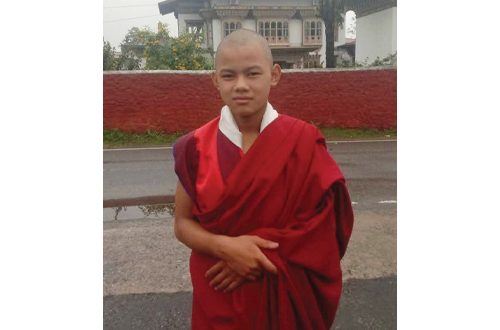
Mother says she will take her fight for justice to higher courts
A grieving mother who lost her 16-year-old son, a monk from a monastic institution in Sarpang Dzongkhag, says she will continue her pursuit of justice in higher courts after the Sarpang Dzongkhag Court upheld the earlier ruling in the case.
The Sarpang Dzongkhag Court delivered its appellate judgment on 11th June 2026, reviewing the verdict issued by the Dungkhag Court on 31st March 2026.
The Dzongkhag Court affirmed and upheld the lower court’s judgment in its entirety.
The appeal arose from a case involving a former Kudrung (disciplinarian) of the monastic institution, who had been convicted of battery by the lower court following an incident involving the 16-year-old monk.
Court findings on causation and suicide allegation
The appellate court rejected the appellant’s (mother) argument that the former Kudrung should be held criminally responsible for the teenager’s subsequent suicide, alleging a direct link to the physical discipline.
The court stated that under the Penal Code of Bhutan (PCB), criminal liability for a secondary consequence requires an unbroken, foreseeable and proximate causal chain.
It held that the prosecution had not framed any formal charge of abetment or complicity in suicide, and that an appellate court cannot introduce new criminal charges suo motu without violating due process.
The judgment further referred to objective digital evidence compiled by the Royal Bhutan Police, including voice logs retrieved from social media chat history.
The court noted that these records indicated that 15 days after the incident, while residing at home, the deceased was planning a voluntary journey to Samtse.
The court also stated that the records pointed to distress arising from personal and domestic issues immediately before his death, which it considered as intervening factors breaking the causal chain between the assault and the suicide.
Battery conviction and medical findings
The mother had argued that the former Kudrung should have been convicted of aggravated battery under Section 159(b) rather than simple battery under Section 159(a).
The court, while noting concerns over the use of physical discipline involving a leather whip and restraint by senior peers, stated that it is bound by medical and forensic standards in determining the nature of injuries.
The judgment cited medical examinations conducted on 31st October and 3rd November,2025, which classified the injuries as non-grievous, including superficial abrasions and contusions.
On this basis, the court held that the injuries did not meet the legal threshold for grievous bodily harm and that the implement used did not meet the definition of a deadly weapon.
It therefore upheld the conviction under Section 159(a) as a petty misdemeanor.
Compensation framework
The mother also sought recalculation of compensation under the Civil Liability Act of Bhutan.
However, the court dismissed the claim, stating that the matter was prosecuted as a criminal case and that the Penal Code applies in determining fines and restitution, which in this case is capped at Nu 11,250 for a petty misdemeanor.
The judgment also noted that the Dratshang had provided Nu 100,000 as semso (condolence sum) to the family and had borne over Nu 289,000 in funeral and ritual expenses.
Mother says she will continue legal battle
Following the judgment, the mother said she was deeply distressed by the outcome and felt justice had not been served.
She said she intends to take the matter to higher courts.
She said, “I am feeling so useless and powerless. I know now that people like us with no strong background will never get justice. I have even started to assume that if only we have money and power we can go around assaulting people and killing them too with no law to convict us.”
She also questioned the reliance on digital evidence cited in the appellate judgment, stating that these materials were not presented at the lower court level.
The mother said she had also submitted her own digital evidence, but felt it had not been adequately considered.
She further said she believed key individuals referenced in both parties’ evidence were not fully examined as she never saw them being called.
She raised concerns over what she described as inconsistencies in explanations regarding the disciplinary action, which she said had earlier been linked to her son leaving the institution to play basketball, and later to allegations of a romantic relationship.
She also questioned the timing of the battery conviction, stating that it came after her son’s death.
The mother said, “Charging the Kudrung for battery after my son died is useless now. Why didn’t they charge him while my son was alive? Now there is no person and no body.”
The mother maintained that her son had visited the Dratshang a day before his death and alleged that he was not treated well during the visit, which she believes contributed to his distress.
She also raised questions about hospital procedures following the incident, saying that she and the boy’s father were required to obtain a police letter before treatment could proceed.
She questioned why such a step was necessary if the injuries were non-grievous, as stated in the medical report and court findings.
On insurance-related concerns, she said the Dratshang had informed her that her son was not included in the enrolment list, making him ineligible for insurance claims.
She questioned how a monk who had been in the institution for around three years was not included in the official monastic records.
“If they had not enrolled my son in their monastic list, then who gave them the right to discipline him?” she says.
The mother also referred to a video she had obtained, which was presented by the kudrung as supporting claims of a relationship involving her son.
She said the identities of the individuals in the video were unclear and she will not agree with the claim.
The video was also shared with this reporter.
A review of the footage showed two figures, but their faces were not clearly visible.
Background of the case
The case relates to the death of a 16-year-old monk from a monastic institution in Sarpang Dzongkhag, who later died by suicide following an alleged prior physical assault at the institution.
On 31st October 2025, the mother and her husband visited their son at the monastic institution in Sarpang and found him lying in his room complaining of stomach pain. He declined offers to take him to hospital or out for a meal.
Later, she noticed severe bruises on his buttocks and said her son told her he had been beaten the previous day by the Kudrung for leaving the Dratshang premises without permission to play basketball.
According to her, he returned, skipped dinner, attended evening prayers, and was later questioned and allegedly beaten after being restrained by senior monks.
She said she immediately sought to take him to hospital but was initially told by the Kudrung that the injuries would be treated within the institution.
The parents declined and took him to hospital instead, where they were reportedly advised to first report the matter to police before treatment could proceed.
They then filed a complaint with the police.
The incident led to the prosecution of a former Kudrung (disciplinarian), who was charged with battery and later convicted by the Dungkhag Court under Section 159(a) of the PCB.
The mother of the deceased later appealed the ruling, arguing that the assault and following events were directly linked to her son’s death, and seeking a conviction for aggravated battery.
Zhung Dratshang had earlier stated that disciplinary action would be taken against the Kudrung through monastic procedures, separate from the criminal proceedings of the court.