 The Bhutanese Leading the way.
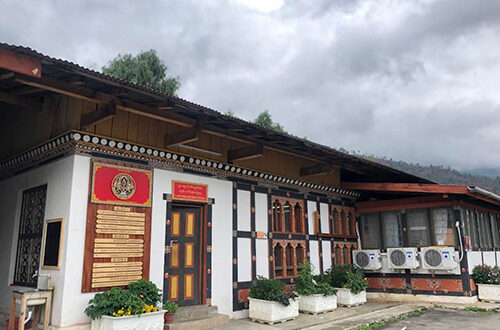
This paper previously reported that while 711 career opportunities were announced under BCSE 2026, nearly half were allocated to technical services.
In contrast, graduates in the education services category are competing for a significantly smaller number of vacancies despite having a much larger pool of applicants.
One such group is the B.Ed. Primary Dzongkha graduates from Paro College of Education, where reportedly around 70 graduates are competing for only 10 available positions.
The graduates also pointed out that the 2025 batch of graduates from the same program will be competing for the same vacancies, further intensifying the competition.
A 24-year-old graduate said that throughout the four-year program, students completed English modules every semester in addition to their core Dzongkha studies.
“We were trained in various subjects, including English, Mathematics, History, Geography, and ICT, which demonstrates our capacity to teach beyond Dzongkha,” the graduate said.
The graduate further added, “With the implementation of the Cambridge Curriculum, we believe our knowledge and training have equipped us to contribute effectively in schools and support the evolving educational needs of the country.”
The graduates further stated that the situation risks wasting both the students’ efforts and the government’s investment in their education. The 24-year-old shared that many graduates from his batch were disheartened after seeing the limited number of vacancies. He added that opportunities for Dzongkha teachers already appear limited, making the situation even more discouraging.
The graduate said that while his qualifications may enable him to pursue employment opportunities in other fields, such positions would not align with the skills and expertise he has acquired through his years of specialized training.
He further shared that the limited opportunities available for Dzongkha graduates have affected how the qualification is perceived by society.
“I feel embarrassed at times to tell people that I graduated with a B.Ed. in Dzongkha. The moment we say we have a Dzongkha background; some people tend to look down on us. On top of that, when the government announces only a few vacancies for our category, it becomes even more disheartening,” he said.
Another 30-year-old graduate said that the current batch of graduates underwent a rigorous selection process based on academic qualifications and interviews before being admitted to the programme.
According to the graduate, this reflected the Ministry of Education and Skills Development’s (MoESD) and the college’s intention to produce highly qualified and competent teachers.
The graduate explained that their training extended beyond language and communication skills. In addition to specializing in Dzongkha, they were taught social, emotional, and wellbeing sciences to prepare them for the evolving demands of modern education.
“With qualifications in our specialized field as well as other relevant areas, we are helpless when it comes to applying within our own category,” he said.
“If qualified and experienced graduates are not recruited, who will take the responsibility?” he added.
The graduate acknowledged that competition is a part of life and clarified that the graduates are not requesting the relevant agencies to recruit all of them. However, he said it would be encouraging if at least around 50 percent of the graduates could secure employment opportunities within their field of study.
“I hope the MoESD can explore alternatives to support us because we have been trained in line with modern educational requirements. This will ultimately contribute to the development of young people and the education sector as a whole,” he said.
Another 22-year-old graduate said that even a modest increase in the number of vacancies could help retain trained and qualified Dzongkha teachers within the education system.
The graduate said that if the RCSC could increase the number of slots by 10-20 positions, it would provide opportunities for more graduates who have been specifically trained for the profession.
“It is not necessary that all of us secure a position through the vacancies. However, throughout our lives, we have been trained and prepared for this particular profession,” the graduate said.
The graduates also pointed out that while the number of candidates in many categories is usually reduced after the Preliminary Examination, B.Ed. Primary Dzongkha graduates are exempted from sitting the Preliminary Examination. As a result, all eligible graduates are able to directly compete in the Main Examination, making the competition for the limited vacancies even more intense.
Furthermore, some graduates from the Dzongkha background, who are usually required to sit for the Preliminary Examination (PE) before progressing to the Main Examination (ME), reportedly opted out of their ongoing PE coaching classes after reviewing this year’s vacancy announcement.
A 23-year-old graduate said that the RCSC’s vacancy announcement implies that nearly 90 percent of Dzongkha graduates may not be able to secure employment in the profession they have been trained for.
The graduate said, “The current batch of teachers are trained with 21st-century skills. Even a 50 percent increase in the number of vacancies would be helpful.”
Similarly, another 22-year-old graduate said that, setting unrealistic expectations aside, the number of available slots is far lower compared to the number of graduates competing for them.
“I now place my hopes on the government increasing the slots for Dzongkha graduates so that we are not left behind,” the graduate said.
The graduates expressed hope that the RCSC and the MoESD may review the long-term demand for Dzongkha teachers and explore ways to better align recruitment with training output, ensuring that qualified graduates are able to contribute effectively to the country’s evolving education needs.

He further shared that the limited opportunities available for Dzongkha graduates have affected how the qualification is perceived by society.
“I feel embarrassed at times to tell people that I graduated with a B.Ed. in Dzongkha. The moment we say we have a Dzongkha background; some people tend to look down on us. On top of that, when the government announces only a few vacancies for our category, it becomes even more disheartening,” he said.
Another 30-year-old graduate said that the current batch of graduates underwent a rigorous selection process based on academic qualifications and interviews before being admitted to the programme.
According to the graduate, this reflected the Ministry of Education and Skills Development’s (MoESD) and the college’s intention to produce highly qualified and competent teachers.
The graduate explained that their training extended beyond language and communication skills. In addition to specializing in Dzongkha, they were taught social, emotional, and wellbeing sciences to prepare them for the evolving demands of modern education.
“With qualifications in our specialized field as well as other relevant areas, we are helpless when it comes to applying within our own category,” he said.