The Bhutanese Leading the way.
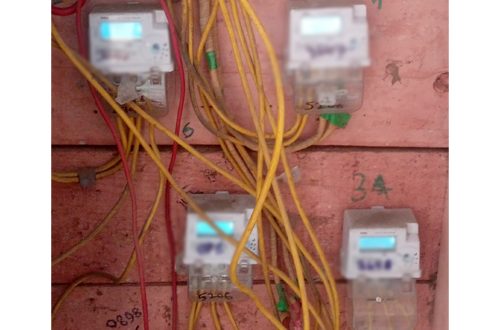
In April 2026, the Prime Minister Dasho Tshering Tobgay said that the government has asked the Electricity Regulatory Authority (ERA) to relook at its domestic power tariff proposal, keeping affordability in mind.
In March 2026, as part of its three-year tariff review cycle, the ERA had approved a power tariff of Nu 5.63 per unit for Low Voltage (LV) users, which are the majority of small users in the country, such as households, commercial establishments, offices, restaurants, etc.
The current LV tariff is Nu 1.28 for the first 100 units (free for rural areas and 200 units free for highlands) and Nu 2.66 per unit for anything above 100 units. There was hue and cry on the proposal.
The Prime Minister had conveyed his views to the Ministry of Energy and Natural Resources (MoENR) at the time, which in turn returned the ERA report to the ERA with new instructions.
However, the ERA returned the report in May to the Department of Energy under MoENR saying that it cannot change its recommendations and methodology.
An ERA official said the only way to bring down the tariff rate would be to violate the Tariff Determination Regulations (TDR), the Electricity Act 2001, and its own internal guidelines. The official said doing so would be illegal and could expose the ERA to legal action from licensees such as Bhutan Power Corporation (BPC) and Druk Green Power Corporation (DGPC), or even from consumers like Heavy Voltage users whose tariffs would need to be hiked to bring down LV tariff.
The TDR, which forms the basis for tariff determination, is itself drawn from the National Energy Policy 2025 approved by the current Cabinet. The policy aims to enhance investments in the renewable energy sector with better return on investment for investors.
An ERA official said that its original report had said the government can use the Royalty Energy which is 13 percent of the total generation in a year that it receives to subsidize the LV users. This Royalty Energy is worth Nu 6 to 8 bn a year.
Faced with the same report the government is now looking at how much subsidy to give to bring down the LV and possibly the Medium Voltage (MV) tariff rates too.
The MoENR had at one point considered giving Nu 4 bn as annual subsidies from this Royalty Energy, but the government felt it was too high and would eat into government revenue.
The latest proposal is Nu 3 bn in subsidies to bring down the LV tariff from the proposed Nu 5.63 per unit to Nu 3.12 per unit. This is compared to the Nu 2.66 per unit current LV tariff.
The final approval has to come from the Cabinet, and once approved, it is expected to be announced shortly.
This will come as a major relief for LV households who could have seen their power bills effectively double without the subsidies but at the same time, it will also eat into government revenue in a major way.
The High Voltage (HV) tariff, which is for big industries that consume most of the power, is currently Nu 2.66 per unit, and this was approved by ERA to be hiked to Nu 2.88 per unit. The proposed tariff for HV is lower as they are all at one place and so the cost of distribution is lower. The HV industries have not made any appeal.
The Medium Voltage (MV) tariff, which is for medium and small-scale industries, had been increased from the current Nu 2.66 to Nu 4.78 per unit. The MV industries have made an appeal and it is likely they will also be included in any relief.
Even the current Nu 2.66 tariff for LV is after heavy subsidization from the government, as the actual LV tariff approved by ERA in 2022 was Nu 4.85, which means the government is already paying around 45 percent of the tariff, or Nu 2.19 per unit, as subsidy for LV.
The ERA-approved Nu 5.63 LV tariff is divided into the generation tariff at Nu 2.37 per unit, which is DGPC’s cost of generating electricity, and Nu 3.26 as the network cost of BPC to distribute and supply that power, maintain the existing infrastructure, and develop new infrastructure.
The HV tariff does not have any subsidy, as the distribution cost is low for the 88 percent of the power they consume, which is in just a few locations such as industrial areas like Pasakha, Norbugang, etc.
As of 31st December 2024, BPC has 255,517 customers in total, of which the sheer majority, at 255,421, are LV or household consumers, who, despite their numbers, only consume 10 percent of the total domestic power.
There are 23 HV consumers with demand of 2 MW or more, who consume the bulk of the local energy at 88 percent, and 73 MV consumers who are below 2 MW and at 300 kVA or above, and consume 2 percent of the power.
The tariff was due for change by July 2025 in a three-year cycle but it was delayed waiting for the National Energy Policy 2025 and the TDR drawn from it.