The Bhutanese Leading the way.
Project records 13.62 percent physical progress, stays on schedule despite geological challenges, supply disruptions and workforce shortages
The Khorlochhu Hydropower Project has entered a new stage of implementation with the award of the Electro-Mechanical and Hydro-Mechanical contracts in June 2026, marking a transition from predominantly civil construction to an integrated phase involving civil, electro-mechanical and hydro-mechanical works. The project’s approved hard cost remains unchanged at around Nu 57 billion (bn). Including financing charges and contingencies, the total estimated project cost stands at Nu 69 bn.
According to the Ministry of Energy and Natural Resources (MoENR), construction of the major civil works packages covering the dam, headrace tunnel and powerhouse is progressing on schedule. As of mid-June 2026, the project had achieved 13.62 percent physical progress. With the latest contract awards, all key project contracts have now been awarded. The project has also secured its debt financing after signing an agreement with India’s Power Finance Corporation Ltd (PFC).
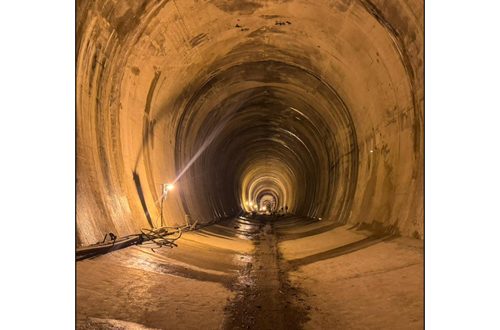
A major construction milestone was achieved in April this year with the completion of heading excavation for both the machine hall and transformer hall, the two critical underground structures that form the core of the powerhouse complex. Excavation of the diversion tunnel has also been completed. Once concrete lining works are completed, which is expected in July 2026, the river will be diverted to allow construction of the main dam to begin.
Construction of the desilting chamber, headrace tunnel, pressure shaft and associated adits is also progressing steadily despite weak geological conditions encountered in some underground sections. Work on diverting a small creek downstream into the headrace tunnel is also on schedule. Despite several implementation challenges, the project remains on track through strengthened construction management and close coordination among stakeholders.
One of the main challenges has been weak geological conditions, which have slowed excavation in parts of the underground tunnel system. The project has also faced supply disruptions involving high-speed diesel, explosives and detonators. Shortages of skilled workers and equipment operators have further affected construction activities. To address these issues, the project has deployed construction experts to improve tunnelling and concreting productivity. Measures have also been taken to maintain buffer stocks of high-speed diesel at the project site while efforts continue to ensure the timely import of explosives and detonators.
The ministry is working closely with the Ministry of Industry, Commerce and Employment and the Ministry of Home Affairs and Cultural Affairs to facilitate the mobilization of skilled workers and equipment operators. Project shareholders are also pushing for an accelerated construction period of 54 months instead of the original 59-month schedule, despite the technical and logistical challenges.
The Khorlochhu Hydropower Project currently employs 238 people, including 230 Bhutanese. Civil works contractors have also engaged around 700 Bhutanese workers in various construction activities. In addition to direct employment, the project has hired locally available construction equipment, including excavators, as well as a large fleet of heavy and light vehicles.
The project has also contributed to infrastructure development by improving roads and bridges between Chazam in Trashigang to Trashiyangtse, while enhancing internal road connectivity in Jamkhar, Tomijangsa and Trashiyangtse gewogs.
Community support initiatives are also underway through corporate social responsibility programs. These include the provision of drinking water facilities, support for community festivals and religious activities, and the development of a school and a Grade I Basic Health Unit that will serve both project workers and nearby communities. The presence of a large construction workforce has also created new commercial and business opportunities for local residents. The project also plans to introduce training programs to build local skills.
After construction is completed, a substantial operations and maintenance workforce will continue to live and work in the area, providing longer-term economic benefits to surrounding communities. The ministry said the Khorlochhu Hydropower Project will play a key role in strengthening Bhutan’s long-term energy security and economic growth.
It forms part of the country’s target to expand renewable energy generation capacity to 25 GW by 2040. Once commissioned, the project is expected to improve the reliability of domestic electricity supply while enabling surplus power generated during the summer months to be exported. The ministry also noted that Khorlochhu is Bhutan’s first hydropower project developed under a strategic partnership model involving private sector participation. It said the project is expected to serve as a model for similar hydropower developments in the future.