The Bhutanese Leading the way.
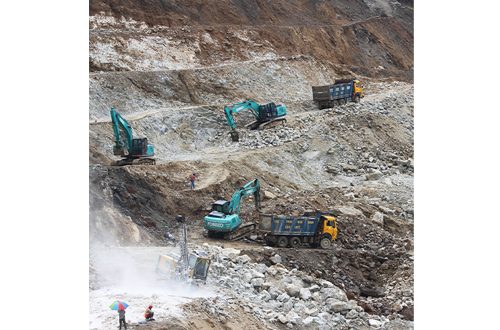
New Mines and Minerals Bill to introduce progressive penalties as DGM expands digital monitoring to improve enforcement and promote sustainable mineral extraction
Bhutan is moving to strengthen regulation and compliance in the mining sector through a new Mines and Minerals (MM) Bill, progressive penalties and expanded use of satellite imagery and drone technology.
Mineral resources are currently governed by the Mines and Minerals Management Act (MMMA) 1995, Mines and Minerals Management Regulations (MMMR) 2022, Surface Collection Rules and Regulations 2024, Restoration Guidelines 2021 and lease conditions. Regulatory oversight is carried out by the Department of Geology and Mines (DGM) through seven regional offices.
However, the existing framework faces operational challenges. Most non-compliance violations under the MMMA attract fixed fines as low as Nu 5,000, which the ministry considers insufficient to deter violations. The sector also faces strong demand for raw and unprocessed minerals rather than value-added products.
The proposed MM Bill will introduce progressive penalties, allowing stricter action against repeat offenders. The government is also reviewing the tax regime to encourage domestic value addition, respond to changing market conditions and increase economic returns.
The DGM’s expanded mandate over surface collection and dredging has added pressure on its limited manpower. A low inspector-to-mine ratio, limited technical personnel and inadequate field mobility make continuous monitoring difficult.
To address this, the DGM is beginning to deploy satellite imagery and drones to supplement field inspections and improve monitoring of scattered mining operations.
Compliance is monitored throughout the life of a mine, beginning with the award of a lease and demarcation of precise boundaries. During operations, inspectors check compliance with the approved Final Mine Feasibility Study (FMFS), while weighbridge records and Transport Permits are used to reconcile production volumes.
At closure, operators must follow an approved Mine Closure and Reclamation Plan covering removal of infrastructure, bench stabilization, topsoil replacement and re-vegetation. The Environmental Restoration Bond is refunded only after post-closure monitoring confirms site stability and vegetation survival.
Under the MMMR 2022, standard mining operations are subject to bi-annual inspections, including unannounced spot checks, while high-volume or environmentally sensitive sites are inspected quarterly or more frequently. Regional DGM officials also conduct monthly field visits and work with the Department of Environment and Climate Change, Dzongkhag Administrations and other agencies on joint monitoring.
Despite this oversight, inspectors have found that many operators lack qualified technical personnel to implement approved FMFS plans properly. The DGM conducts annual training programmes to improve private sector capacity and compliance with safety, environmental and engineering standards.
Common non-compliance includes improper bench orientation, poor overburden management and inadequate dust suppression. There is also growing misuse of small land development provisions, with some landowners attempting to commercialize activities intended for agricultural or individual land use.
Environmental safeguards include controlled benching, topsoil preservation, progressive reclamation and an Environmental Restoration Bond. Operators must also use check dams, sedimentation ponds, stream buffer zones, haul-road watering, covered mineral transport and greenbelt barriers to protect water and air quality.
Overburden can only be deposited at approved sites with retaining walls. Dumping down slopes or into water bodies is prohibited and subject to severe penalties.
Before extraction begins, operators must obtain FMFS approval, execute a Mining Lease Agreement and appoint a certified Mine Manager. They must also secure Environmental Clearance, prepare a Mine Closure and Reclamation Plan, obtain forest clearances and relevant NOCs through public consultations. An Environmental Restoration Bond and surface rent must also be paid before operations begin.
Illegal mining is rarely large-scale due to administrative controls and local vigilance. However, boundary encroachments at approved mining and dredging sites remain a concern. High demand for construction aggregates also creates a risk of unmonitored extraction in remote areas, where difficult terrain makes regular surveillance and night patrols challenging.
Digitalisation has strengthened monitoring and revenue collection through the online Mines Administration System. The system enables online payment of royalties and mineral rents, while regional offices reconcile monthly returns with physical dispatch records. Some remote quarries and dredging sites, however, still lack calibrated weighbridges, requiring manual verification.
The proposed legislation would also modernize provisions on mining methods, mineral beneficiation, low-grade and reject ore utilization, associated mineral recovery, critical minerals and strategic mining assets. It would strengthen restoration requirements and introduce more flexible taxation and fiscal policies.
The new framework could also increase benefits for local communities through Community Development Funds and Local Content policies.
Despite the challenges, the DGM says compliance has remained high over the past three years, with no major offences or severe regulatory violations recorded nationwide. Most non-compliance has involved minor deviations from approved mine plans and a few cases of mineral excavation presented as land development. All reported cases were addressed under the existing rules and regulations.