The Bhutanese Leading the way.
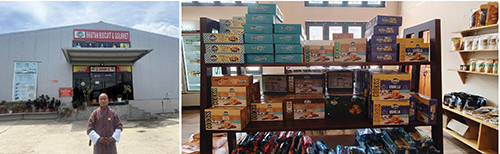
Ten years ago, the thought of a Bhutanese biscuit competing with international products seemed far-fetched. Yet today, packets of KinTen Biscuits are found in all 20 dzongkhags, telling not only the story of taste and quality, but also the story of one man’s unshakable determination.
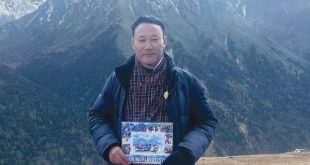
That man is Kinley Tenzin, the eldest son of his family with two siblings, who grew up in Sephu, Wangdue Phodrang. Known today as the Founder of Bhutan Biscuits, his journey was built not on privilege but on sacrifice, risk, and resilience.
In the beginning, Kinley’s dream of making biscuits for Bhutan was met with skepticism. With little support, he went door to door, carrying packets of biscuits himself, trying to convince people to try them. “Some laughed, some turned me away,” he recalls. “But I believed in the product, and that belief kept me moving.”
The hardest test came financially. To keep his dream alive, Kinley made the painful choice to sell his own property. “It was heartbreaking, but I knew if I gave up then, Bhutan would lose the chance to have a brand that could stand proudly on the world stage,” he says.
For nearly a decade, he carried this struggle mostly alone. Then, when his dream was on the verge of collapse, help finally came. T-Bank supported him by approving a loan quickly, giving him the much-needed lifeline to continue his journey. The Department of Marketing under the Ministry of Agriculture, along with Food Corporation of Bhutan Limited (FCBL), stepped in to help distribute his products across the country. “Their trust and backing gave me the strength to move ahead,” Kinley says. “Without them, KinTen would not be here today.”
In 2024, he officially opened his factory in Wangdue. Built to match international standards and equipped with European-model machinery, it marked a turning point in his life and for Bhutan’s cottage industry. From just 25 workers, the company has now grown to employ 30 to 35 people, providing stable jobs and hope for local families.
KinTen produces 10 to 15 biscuit varieties, from cookies to cream crackers, and has already been recognized under the Gyelsung project. Kinley is also pushing to supply healthy biscuits to schools, ensuring Bhutanese children have access to nutritious and affordable snacks.
What makes KinTen stand out is not just taste, but also its international-style packaging and labeling, a rare standard for Bhutanese products. Despite the quality, Kinley has kept the biscuits affordable, with retailers receiving 20–25 percent margins.
At the CSI Market in Thimphu, KinTen has already won praise. “The packaging is on an international level, but the price is still cheap for everyone,” says Sir Khendrup. “That is what makes KinTen unique, it feels global but is proudly Bhutanese.”
Yet, success is not without its challenges. For now, KinTen products are available across all 20 dzongkhags, but plans to expand internationally are on hold due to limited working capital. The company is even operating at a loss, but Kinley and his team have managed to keep the business running smoothly. “It is difficult, but every challenge only makes us stronger. We are building for the long term,” he says.
Today, KinTen are a familiar sight in Bhutanese homes, but for Kinley, this is just the beginning. His vision is to one day take the brand abroad. “I want to walk into a store overseas and see a packet of KinTen on the shelf,” he says. “When people pick it up, they should know it comes from Bhutan. That is the pride I am working for.”
Even with growing success, Kinley never forgets the lonely years when he was struggling. “Back then, I was alone. Now people call it luck, but it was not luck, it was sacrifice, sleepless nights, and finally support at the right time,” he says firmly.
KinTen is now more than just a company. It is a symbol of resilience and national pride, showing that Bhutanese products can meet the highest standards when built with courage and vision. As Kinley puts it: “This brand is not just mine, it belongs to Bhutan. Every packet we make carries the belief that if we do not give up, nothing is impossible.”