The Bhutanese Leading the way.

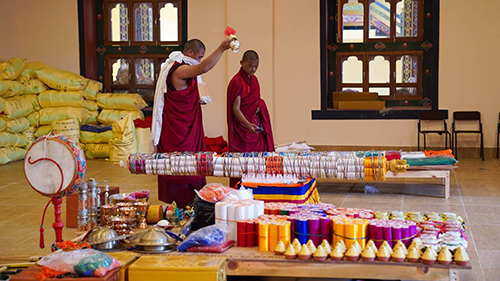
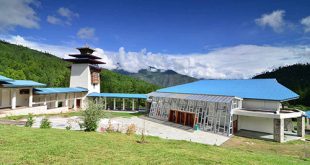
If you were to walk into Sarpang Dzong today, you would be greeted by a subtle fragrance of saffron and camphor, and the devoted focus of revered hands at work.
20 Zung Lopens and 60 supporting monks are gathered at Sarpang Dzong. Day in and day out, they are crafting and preparing the most vital element of our 108 Jangchub Chortens, the Zung.
To understand Zung, imagine crafting a magnificent body, sculpted with perfect proportion and grace, that waits patiently for a heart to bring it to life.
Without Zung, a chorten (stupa) is simply a physical structure of stone, earth, and mortar. With Zung, it becomes a sacred embodiment of the enlightened Body, Speech, and Mind of the Buddha.
Known as “The Wisdom Heart of a Stupa,” the Zung comprises:
Wisdom Mind (Sok Shing): The “Life Essence Tree,” a sacred wooden pillar running through the central axis of the chorten, serving as its spiritual spine and channel of enlightened energy.
Wisdom Speech (Sung): Thousands of sacred dharani mantras meticulously wound around incense sticks and inscribed on saffron-dyed traditional paper.
Wisdom Body: Sacred statues (Yeshe Sempa), precious relics and auspicious items representing prosperity (Yang Dze) carefully enshrined within the chorten.
When the Zung is placed within and consecrated, the chorten is transformed from a physical monument into a sacred vessel endowed with the enlightened presence of the Buddha’s Body, Speech and Mind.
Even when no living master is present to teach, a consecrated chorten continues to radiate blessings and awakened wisdom. It stands as a timeless beacon of compassion, offering protection from harm and disease, and fostering harmony and peace for all living beings who walk past it for generations.
Every mantra rolled and every sacred item prepared by the monks at Sarpang Dzong is an offering of harmony for all living beings.
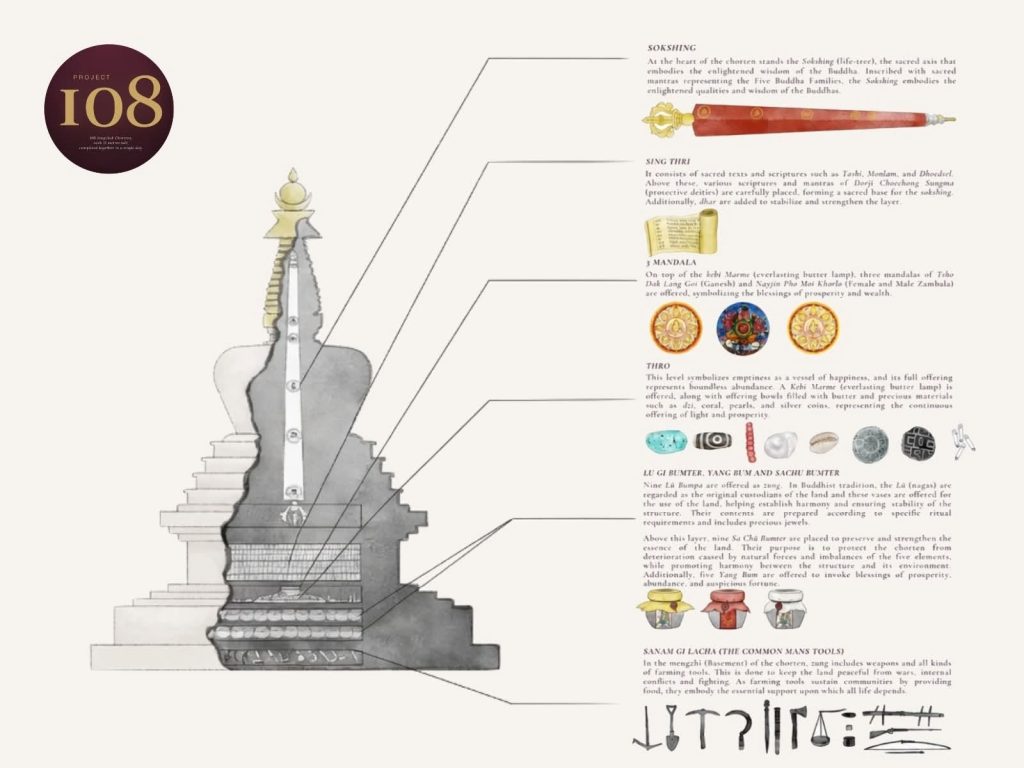
Hidden within the Chorten walls is an entire sacred universe, carefully built layer upon layer with prayers and blessings for all living beings.
Nothing is placed within by chance.
From its foundation to its pinnacle, every sacred object carries meaning.
At the very base (Mengzhi) rests the Sanam Gi Lacha, the tools of ordinary life. Farming implements honour the labour that nourishes communities, while symbolic weapons are sealed away as aspirations that conflict may give way to peace and harmony may prevail for generations to come.
Above them are the sacred vessels, the Lü Bumter, Sa Chü Bumter and Yang Bum. The nine Lü Bumter are offered to the Lü (nagas), the original custodians of the land, invoking harmony between the chorten and its surroundings. The Sa Chü Bumter preserves the essence of the earth and protects against natural imbalances, while the five Yang Bum invoke boundless blessings of abundance, prosperity and auspicious fortune.
Next comes the Thro symbolising emptiness as a vessel for boundless happiness. At its centre rests the Kebi Marme, the everlasting butter lamp, surrounded by precious offerings of dzi beads, coral, pearls, silver coins and other sacred substances, a prayer that wisdom and prosperity may endure through time.
Resting above are the three sacred mandalas of Tsho Dak Lang Goi (Ganesh) and Nayjin Pho Moi Khorlo (the Female and Male Zambalas), symbolising divine prosperity, well-being and the flourishing of all beings.
Layer upon layer, sacred scriptures are then carefully enshrined within the Sung Thri. Texts such as Tashi, Monlam and Dhoedsel, together with the mantras of Dorji Choechong Sungma (protective deities), are prepared by hand. Sacred prayer flags (Dhar) are added to strengthen and stabilise this sacred layer.
And finally, at the very heart of the chorten stands the Sokshing, the sacred Life Tree. Running through the central axis from its base to its pinnacle, the Sokshing is inscribed with sacred mantras representing the Five Buddha Families. It is the spiritual spine of the chorten, embodying the enlightened qualities and wisdom of all the Buddhas.
Together, these sacred layers become the Zung, the Wisdom Heart of a Chorten.
When we look upon a chorten, we see only its outer form. What we do not see are the countless prayers hidden within its walls, prayers for peace over conflict, harmony between humanity and nature, prosperity for all beings, and the flourishing of wisdom and compassion for generations yet to come.
If you look closely at the central axis of any chorten, hidden deep within its stone core stands a singular, sacred wooden pillar. In Dzongkha, it is known as the Sokshing ( ), translating to the “Life Tree”.
Just as the human body relies on a central spine and channel (Avadhuti) to hold life and awareness together, the chorten relies on the Sokshing to serve as its central spiritual pillar.
A Sokshing is not just any piece of timber. It is carved with painstaking care and deep reverence:
Sacred Wood: Traditionally carved from precious red or white sandalwood, fragrant agarwood or evergreen trees.
Pure Pigments: Finished in vibrant red mineral pigments like vermilion or red ochre.
Golden Mantras: Inscribed in gold with sacred mantras representing the Five Buddha Families, capturing the enlightened qualities and wisdom of all Buddhas.
Silken Protection: Wrapped in soft silk scented with saffron and camphor, and surrounded by sacred relics.
Placed vertically at the exact center, the Sokshing functions as a living channel for enlightened energy.
It unites the wisdom of the Buddha’s Body, Speech and Mind into a single axis, grounding celestial blessings into the physical earth.
When you circumambulate a chorten, you are moving around this silent, golden spine of light, a timeless Life-Tree that keeps the spirit of the chorten vibrant and alive for centuries.