The Bhutanese Leading the way.
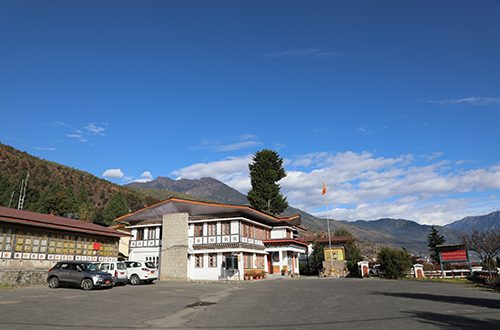
When the need was urgent, they were recruited. Now, as talks of a teacher surplus continue to surface, Dzongkha contract teachers say they are being left behind, facing shorter contracts and fading job security.
A Dzongkha contract teacher from the south shared that although his contract was supposed to run until this year, it ended last year, cutting it short by a year.
He said, “My contract was supposed to end this year, but it ended last year. When I reached out to the relevant departments, I was told that contract teachers who are not called back by school principals will not have their contracts renewed.”
However, he clarified that in his case, the issue was not about renewal, but the premature termination of his contract, despite it originally being valid for another year.
He also shared that under normal procedure, employees who are not granted an extension are given a three-month prior notice.
However, in his case, he said he did not receive any such notification.
According to his contract extension order letter, he has been serving as a contract teacher since 2010, with his contract extended over the years until 31st December 2026.
The teacher said that in the end, he had no option but to accept the situation.
When he went to complete the final paperwork, he was reportedly asked by an official to state the reason as “resignation.” However, he said, “I told him that this is not voluntary, as I still had one more year left on my contract. At this point, it is a termination, because resignation has its own meaning.”
He was later informed that the Ministry of Education and Skills Development (MoESD) had issued a notice as early as October, and that the communication gap lay with the respective dzongkhags and thromdes. When he followed up with an official from his dzongkhag, the official reportedly acknowledged receiving the notice.
“He said he had received it, so I asked him why it was not communicated to us. I got frustrated and even asked him if he was planning to send it only next year,” the teacher said.
There are reportedly around 537 contract teachers facing similar situations across the country.
He also spoke about a recruitment examination where Dzongkha contract teachers were required to sit for an exam to qualify for teaching other subjects.
According to him, many Dzongkha teachers withdrew from the process as the viva voce component was conducted entirely in English, despite the candidates coming from a Dzongkha background.
He further said that since the recruitment was under a general category, successful candidates were expected to teach subjects such as Science and Mathematics. He added that he was among those who did not clear the examination.
The teacher, who has 15 years of teaching experience, is now working as a taxi driver. He said that because the notice of termination came late, he did not have enough time to look for alternative employment, making the situation a shock for him.
He also shared that several teachers in similar circumstances are struggling to cope, particularly those who have children and family responsibilities to support.
Namgay (name changed), another Dzongkha contract teacher, who wished to remain anonymous like others quoted in this report, said the government had earlier indicated plans for regularization, which influenced their decisions to continue in contract service.
Namgay’s contract was originally supposed to end this year, it was shortened due to the upgradation from P5 C to P5 B, which effectively led to the early termination of his contract.
The teacher also said that relevant agencies such as the RCSC and the MoESD did not consult contract teachers on whether they were agreeable to the contract being shortened in line with the upgradation process.
He further pointed out that the concerned departments had not completed a proper assessment of the number of excess teachers in the system, which contributed to the delayed communication. “I think this is why we did not receive individual notifications about the end of our contracts,” the teacher said.
According to Namgay, the contract extension process was linked to a general category examination, which was said to have disadvantaged many Dzongkha contract teachers.
The teacher added that the MoESD had issued a conditional notice stating that extension matters were under review, but there was still no clear confirmation on whether extensions would be granted, even as of 10th October 2025.
He said, “I think the MoESD and RCSC should take responsibility, as out of 537 contract teachers, nearly 200 teachers had their contracts shortened, mostly Dzongkha contract teachers.”
He also mentioned that most Dzongkha-background contract teachers were unable to appear for the examination, as the process was intended to repurpose Dzongkha teachers to teach other subjects.
He said that, ideally, upgradation should reflect recognition of good performance during service, but in this case, it resulted in the shortening of contract periods instead of extension.
“I got through the exam and assigned to teach subjects other than Dzongkha with a contract period of 8 months,” he said.
A Dzongkha contract teacher from Samtse shared similar concerns, stating that the upgradation from P5 C to P5 B also led to the shortening of the contract period. The teacher said that a notification received last November informed that the contract would be reduced by two years, ending in December last year, just one month after the notice.
“Until today, I have no job and have been relying on my family for support,” the teacher said.
Having served for more than four years, the teacher added that opportunities related to the Dzongkha background are now limited, making it difficult to apply for other jobs.
The teacher also shared that after not receiving a contract extension, he has been struggling a lot. “I even bought a vehicle on loan, thinking my contract would continue until next year. However, with the sudden end of my contract, I had to sell my vehicle,” the teacher said.
According to the teacher, his skillset is primarily in teaching, with limited confidence in transitioning to other fields.
Similarly, another teacher with 16 years of experience said that in order to be regularised, the requirement is to obtain a teaching qualification from Samtse College of Education or Paro College of Education.
“For someone who has been in the teaching profession for so long, going back to the beginning feels like a waste of time,” the teacher said.
For this teacher as well, the lack of contract extension has had a significant impact on both personal and family life. “Such policies make me feel like leaving the country,” the teacher added.
According to these teachers, many with 10 to 16 years of experience, the transition has been particularly difficult. Having dedicated years to the profession, they now find themselves starting over in unfamiliar fields, highlighting the emotional and economic toll of the decision.
This paper will seek updates and responses from the relevant departments.