The Bhutanese Leading the way.
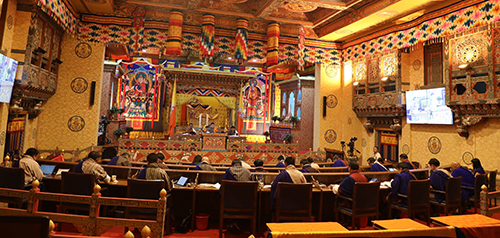
The National Council unanimously adopted the Bhutan–Singapore Double Taxation Avoidance Agreement on 8th June.
The Double Taxation Avoidance Agreement (DTAA) is Bhutan’s third bilateral tax treaty and was negotiated by the Royal Government of Bhutan with the participation of the Gelephu Mindfulness City Authority (GMCA). The agreement is intended to address taxation issues arising from cross-border economic activities by allocating taxing rights between the source country and the country of residence of taxpayers, thereby preventing the same income from being taxed in both jurisdictions.
The agreement is closely aligned with the Organisation for Economic Co-operation and Development (OECD) Model Convention and reflects Bhutan’s efforts to facilitate capital inflows and encourage cross-border investment. Unlike Bhutan’s earlier tax treaties with India and Bangladesh, which were primarily source-based, the Bhutan-Singapore agreement adopts a more investment-oriented framework.
The agreement also includes provisions aimed at promoting transparency, cooperation, and the prevention of tax evasion and avoidance. Mechanisms for the exchange of information and mutual agreement procedures are expected to strengthen Bhutan’s ability to address cross-border tax compliance risks and resolve treaty-related disputes.
According to the agreement, greater tax certainty, non-discriminatory treatment, and reduced tax- related barriers are expected to support trade and investment between the two countries. The treaty also broadens Bhutan’s international tax network while aligning with the country’s evolving tax framework and long-term economic and investment strategy.
The agreement recognises Gelephu Mindfulness City (GMC) within the treaty framework. GMC, a Special Administrative Region within Bhutan with executive, legislative, and judicial autonomy, has adopted Singaporean laws for corporate, commercial, and income tax matters. Officials noted that GMC’s first DTAA being concluded with Singapore is significant for facilitating economic engagement and reflecting Singapore’s recognition of GMC’s institutional framework and strategic vision.
The agreement is expected to enhance investor confidence by providing greater certainty and reducing the risk of double taxation. While the negotiated withholding tax rates are lower than domestic rates and the treaty does not include a provision equivalent to Article 12A on Fees for Technical Services, these features are consistent with an OECD-aligned framework intended to improve Bhutan’s attractiveness as an investment destination.
The government noted that while some revenue streams may be moderated in the short term, the agreement is expected to support increased investment, economic activity, and a broader tax base over time. It was assessed as being aligned with Bhutan’s national interest and supportive of the country’s evolving economic architecture and international tax framework.
Among the key benefits identified are the expansion of Bhutan’s treaty network and stronger economic ties with Singapore, reduced instances of double taxation, and improved tax certainty for businesses, investors, service providers, and public sector entities. The agreement also recognises GMC’s distinct tax regime while maintaining a single bilateral treaty relationship with Singapore.
Additional outcomes secured by Bhutan include differentiated Permanent Establishment (PE) thresholds for Bhutan and GMC, a tax-sparing provision preserving fiscal incentives, protections for government entities, provisions on information exchange, and an anti-abuse framework based on the Principal Purpose Test (PPT).
Bhutanese airlines, including Druk Air, are expected to benefit from exemption from corporate income tax in Singapore on income derived from the carriage of passengers and cargo under Article 8 of the agreement. The treaty also provides relief to Bhutanese individuals working in Singapore for Bhutanese entities by eliminating instances of double taxation on their income. The agreement, however, also involves several trade-offs. As with other DTAAs, it takes precedence over domestic law where inconsistencies arise, potentially limiting Bhutan’s taxing rights over certain income earned by Singapore-resident entities and individuals. Lower withholding tax rates on dividends and interest may reduce source-based tax revenues in some Cases.
The absence of a specific provision on Fees for Technical Services may also limit Bhutan’s ability to tax certain cross-border service payments at source. Additionally, Bhutan agreed to the removal of the Permanent Establishment anti-fragmentation rule in line with Singapore’s position and OECD practices, although the Principal Purpose Test and domestic anti-avoidance provisions remain in place.
The agreement further means that Bhutan would not be able to levy income tax on profits derived by a Singaporean airline from the carriage of passengers and cargo from Bhutan should such operations arise. Authorities also noted that implementation of the treaty will require coordinated administrative arrangements between Bhutan and GMC, particularly regarding residence determination and the application of differentiated PE thresholds.
Prior to negotiations, a comprehensive stakeholder consultation on the Bhutanese Treaty Model was conducted on October 18, 2023. Participants included representatives from the Bhutan Chamber of Commerce and Industry, Druk Holding and Investments, Druk Air Corporation, Tashi Airlines, the Construction Association of Bhutan, the Association of Wood-Based Industries, the Association of Cable Operators, and the Handicraft Association of Bhutan. The Gelephu Mindfulness City Authority was also closely involved throughout the negotiation Process.
As no significant departures from the Bhutanese Treaty Model occurred during negotiations with Singapore, a separate post-negotiation stakeholder consultation was not undertaken. However, targeted outreach and engagement are expected to be carried out as necessary to support the implementation of the agreement, particularly for stakeholders directly affected by its provisions.