The Bhutanese Leading the way.
By Kinley Tenzin Wangchuk
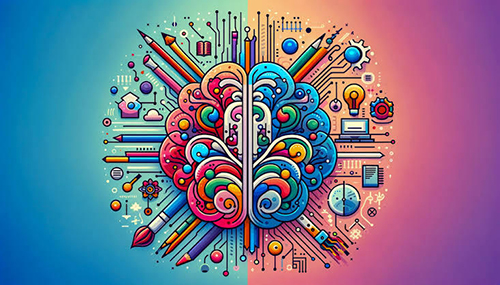
In our relentless pursuit of material development, it is not difficult to imagine a society undermining the value of the liberal arts. A small developing country needs doctors, engineers, architects, scientists, and technologists. We must therefore encourage and prioritize the study of Science, Technology, Engineering, and Mathematics (STEM). Yet we must not forget our historians, poets, musicians, writers, and social scientists.
Moving forward, one without the other would be like pedaling a bicycle up Bhutan’s steep mountains with only one gear. The study of STEM must not be fostered at the expense of the liberal arts and humanities. As we rush into an increasingly technology-driven world, captivated by speed, commerce, finance, and material gain, we should also have the wisdom to appreciate the enduring value of disciplines that explore the human condition.
The liberal arts encompass subjects such as philosophy, sociology, history, psychology, literature, languages, political science, anthropology, mathematics, and the arts. These disciplines engage with profound questions about human experience, meaning, culture, ethics, and society.
More than a century ago, French novelist Jules Verne foresaw a future that bears remarkable similarities to our own. Best known for classics such as Twenty Thousand Leagues Under the Sea and Around the World in Eighty Days, Verne is often called the “father of science fiction” because of his uncanny ability to predict future technologies.
In 1989, Verne’s great-grandson discovered an unpublished manuscript titled Paris in the Twentieth Century, which was eventually published in 1994. The novel tells the story of Michel, a gifted young graduate trained in literature and the classics. He finds himself living in a society that values only business, finance, and technology while dismissing literature, music, and the arts as irrelevant.
Michel struggles to find meaning in a world where efficiency and profit have replaced culture and imagination. By the end of the novel, isolated and despairing, he wanders through a mechanized Paris before collapsing alone in the snow.
Verne’s warning remains strikingly relevant today. As technological advancement accelerates, societies often become tempted to measure education solely by its economic returns.
Yet ironically, the rise of Artificial Intelligence (AI) may be restoring the value of the liberal arts.
AI is extraordinarily capable at calculations, pattern recognition, translation, coding, and prediction. But it struggles with the deeper questions that define human existence. It cannot genuinely understand why history repeats itself, why people resist change, why cultures evolve differently, or why a story moves someone to tears.
The strength of a liberal arts education lies precisely in these areas. It prepares people not to compete with machines but to ask the questions machines cannot ask.
Employers increasingly seek individuals who can think critically across disciplines, communicate effectively, exercise ethical judgment, and understand human behaviour. Technical expertise remains important, but so do creativity, empathy, adaptability, and the ability to make sense of complexity.
A liberal arts education is not merely preparation for a specific job. It is preparation for life.
For decades, students and parents have understandably gravitated toward degrees that seemed to offer stable careers and financial security. Computer science, engineering, finance, and business became popular choices because technology companies expanded rapidly and demand for technical skills appeared endless.
However, AI is beginning to automate many entry-level tasks in precisely those sectors. Coding assistants can now generate software, while algorithms increasingly perform work once assigned to junior analysts. The “safe” career paths of yesterday may no longer offer the same guarantees.
As technology grows more powerful, human capabilities become more valuable.
In his book The Human Edge: How Curiosity and Creativity Are Your Superpowers in the Digital Economy, Greg Orme argues that the qualities that distinguish humans from machines can be summarized by four Cs: consciousness, curiosity, creativity, and collaboration. Rather than competing with AI, he argues, people must become more deeply human.
This insight is especially important in an age marked by geopolitical tensions, social polarization, economic uncertainty, and rapid technological disruption. The liberal arts help us understand ourselves and others, enabling us to navigate a complex and interconnected world.
Few scholars have defended the humanities more passionately than philosopher Martha C. Nussbaum. In her influential book Not for Profit, she argues that education systems around the world have become excessively focused on economic productivity at the expense of critical thinking, empathy, and civic responsibility.
According to Nussbaum, education should not simply produce workers for the economy. It should cultivate informed, thoughtful, and compassionate citizens capable of participating meaningfully in democratic societies.
When education becomes narrowly focused on profitability, we risk losing essential human capacities: the ability to question authority, understand people who are different from us, empathize with marginalized groups, and address complex social problems. Such losses weaken not only individuals but also the health of democratic institutions.
Nussbaum therefore argues that societies must resist reducing education to a tool for increasing gross domestic product. Instead, they should reconnect education with the humanities so that students develop the intellectual and moral capacities needed for responsible citizenship.
Her argument has become even more compelling in the age of AI.
As machines become increasingly capable of processing information, the uniquely human qualities fostered by the liberal arts become more important. The future may belong not simply to those who can generate information but to those who can interpret it wisely, ethically, and creatively.
Some of the most influential innovators in modern history understood this principle well.
Edwin Land, the founder of Polaroid, believed that innovation occurs at the intersection of technology and the humanities. Steve Jobs embraced the same philosophy when building Apple. He famously remarked that technology alone is not enough; it is technology married with the liberal arts and humanities that produces results capable of touching the human heart.
Jobs understood that people do not simply buy technology because it is functional. They are drawn to products that reflect beauty, design, emotion, storytelling, and human understanding, all areas deeply connected to the liberal arts.
The most transformative innovations often emerge when technical excellence meets creativity and human insight.
This lesson is particularly relevant for developing countries. Economic growth and technological progress are essential, but societies also need thinkers who understand history, culture, ethics, governance, language, and identity.
Engineers can build roads and bridges, but historians help societies understand where they have come from. Scientists can develop new technologies, but philosophers help us examine their ethical implications. Economists can generate growth, but writers, artists, and social scientists help us understand what makes life meaningful.
A nation requires both.
The challenges of the twenty-first century are not merely technical problems awaiting technical solutions. Climate change, social inequality, political polarization, cultural conflict, and the ethical dilemmas posed by artificial intelligence all involve human values and collective choices. Addressing such challenges requires more than data and algorithms. It requires judgment, empathy, imagination, and wisdom.
These are precisely the capacities nurtured by the liberal arts.
The English biologist Thomas Henry Huxley once described a truly educated person as someone whose intellect is disciplined, whose conscience is developed, whose appreciation for beauty is cultivated, and who respects others as equals. Such an education, he argued, enables individuals to live in harmony with both nature and society.
His description remains remarkably relevant today.
The purpose of education should not be limited to producing efficient workers. It should also cultivate thoughtful citizens, responsible leaders, creative problem-solvers, and compassionate human beings.
In the coming decades, artificial intelligence will continue transforming economies, workplaces, and societies. Many technical skills will evolve or become automated. Yet qualities such as curiosity, ethical reasoning, creativity, communication, cultural understanding, and empathy will remain indispensable.
These qualities are not peripheral to education. They are central to it.
The future will undoubtedly require scientists, engineers, programmers, and innovators. But it will also require philosophers, historians, writers, artists, psychologists, and social scientists who can help society navigate the profound questions raised by technological change.
The choice before us is therefore not between STEM and the liberal arts. It is between a narrow vision of education and a complete one.
A truly successful society will recognize that technological advancement and human understanding are partners rather than competitors. One drives progress; the other gives it meaning.
As Seneca observed nearly two thousand years ago, “The liberal arts do not lead the mind all the way to virtue, but they equip it for the journey.”
In the age of AI, that journey may be more important than ever.