The Bhutanese Leading the way.
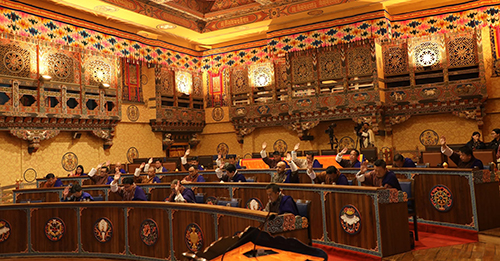
The National Council unanimously adopted the Budget Appropriation Bill for Financial Year (FY) 2026-2027 and the Supplementary Budget Appropriation Bill for FY 2025-2026, with all 22 Members voting in favor.
The appropriation for FY 2026–27 stands at Nu 153.3 billion (bn). Of this, Nu 63.03 bn has been earmarked for recurrent expenditure, Nu 72.54 bn for capital expenditure, Nu 16.68 bn for loan repayments, and Nu 1.05 bn for on-lending activities.
With overall resources projected at Nu 110.3 bn, the fiscal deficit stands at 6.5 percent of GDP.
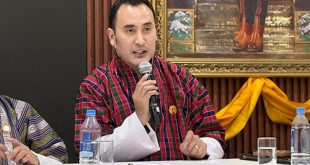
Minister of Finance Lyonpo Lekey Dorji said that the proposed fiscal plan prioritizes investments in infrastructure, social services, climate resilience, and other initiatives aimed at accelerating economic transformation. The budget also seeks to support the implementation of priority programs under the 13th Five-Year Plan (FYP).
Recurrent expenditure is estimated at Nu 63.03 bn, reflecting a 7.9 percent increase over the FY 2025–26 approved budget. The rise is driven mainly by a 4 percent inflation adjustment, onboarding of Annual Maintenance Contracts (AMCs) for whole-of-government systems, allocation for the Population and Housing Census 2027, and preparations for the Fourth Local Government Elections.
Capital expenditure is estimated at Nu 72.54 bn , accounting for 29.6 percent of the total capital outlay under the 13th FYP. This marks an increase from 16 percent in FY 2024–25 and 25 percent in FY 2025–26, reflecting a shift from preparatory activities to full-scale implementation.
Financing for capital expenditure includes 42.3 percent grants from development partners, 34.9 percent borrowings, and 22.8 percent from internal resources.
On-lending is estimated at Nu. 1.05 bn, mainly financed through ADB loans. Major allocations
include the Phuntsholing Township Development Project (Nu 652.7 million), the Green and Resilient Affordable Housing Sector Project (Nu 376.4 million), and the Green Power Readiness Enhancement Project (Nu 19.4 million), focusing on infrastructure, housing, and energy preparedness.
Principal repayment is estimated at Nu 16.7 bn.
The social sector receives the largest allocation at Nu 47.37 bn (31 percent), followed by the economic and public services sector at Nu 40.39 bn (25 percent). General public services and national debt service are allocated Nu 28.44 bn and Nu 28.81 bn respectively, each accounting for 19 percent.
Transfers through grants and subsidies account for 1.3 percent of total expenditure. Grants include Nu 266.4 million to non-budgetary agencies such as the Bhutan Chamber of Commerce and Industry, Bar Council of Bhutan, Alternative Dispute Resolution Centre, and Bhutan Red Cross Society. Subsidies include operational support to BBSCL, interest subsidies to Bhutan Agro Industries Limited, Druk Air, and NHDCL, along with rural insurance and domestic power tariff support.