The Bhutanese Leading the way.
Despite Bhutan’s efforts to improve access to education, factors such as poverty, family migration, household responsibilities, geographical barriers and learning difficulties continue to affect children’s ability to remain in school.
To understand the reasons behind school dropout, repetition and non-enrolment, the Ministry of Education and Skills Development (MoESD) conducted the Study on Dropout, Repetition and Children Who Have Never Attended School in Bhutan in 2018, building on findings from an earlier assessment in 2017.
The study found that children leave school or do not enroll due to a combination of social, economic and personal challenges.
These include poverty, migration of families, responsibilities at home, long distances to schools, disabilities and special educational needs, limited parental awareness, and academic and psychosocial difficulties.
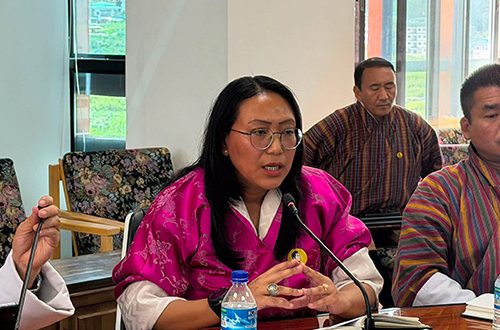
The Education Minister, Lyonpo Yeezang De Thapa, said, “The study identified multiple contributing factors, including poverty, family migration, household obligations, and geographical barriers such as long distances to schools.”
The Education Minister added that individual challenges also play a role in children’s participation in education.
“It also highlighted individual challenges such as disabilities and special educational needs, limited parental awareness, and academic and psychosocial difficulties,” Lyonpo said.
To address these challenges, the ministry said it has introduced several measures aimed at improving school access and retention. These include expanding Early Childhood Care and Development (ECCD) services, strengthening inclusive education programmes, expanding school feeding programs and improving support for vulnerable learners.
School feeding programs currently benefit 31,579 students across 335 schools, while ECCD services have expanded to 640 centers.
The ministry has also strengthened school guidance and counselling services and monitoring systems to identify students at risk of dropping out.
For learners who have left formal education, alternative pathways such as Non-Formal Education (NFE) and Community Learning Centers (CLCs) provide opportunities to continue learning. Currently, 277 centers serve 2,402 learners.