The Bhutanese Leading the way.

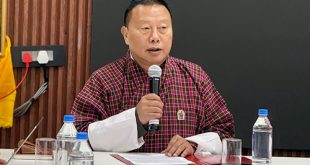
As presented in the State of the Nation report delivered by Prime Minister Dasho Tshering Tobgay on 3rd July, the government has set out a detailed plan to raise the sector’s contribution from around 15 percent of GDP to Nu 50 billion (bn) by 2029, while keeping the heart of Bhutanese farming traditions alive.
At the center of this transformation is the Million Fruit Trees Plantation project, launched under the guidance of His Majesty The King in 2022. By this year, more than 3.5 million high-value fruit trees have been planted across the country, supported by over a thousand DeSuups who have helped farmers plant and care for the trees. In its latest phase alone, which began in June 2025, over 138,000 new seedlings have been added, all produced within Bhutan, a sign of growing domestic capacity. Though average survival rates from earlier phases stand at around 63 percent, the government plans to continue monitoring and supplying saplings to ensure long-term results.
Protecting crops from wild animals has long been a worry for farmers, and the government has expanded chain-link fencing projects to address this. So far, fences have secured more than 12,500 acres of farmland across all 20 Dzongkhags, directly benefiting thousands of households, with plans to protect another 15,000 acres this year. At the same time, irrigation has been stepped up through 119 projects covering over 11,500 acres, bringing more certainty to farmers who have often depended on seasonal rains that are becoming less predictable.
The plan is not just about growing more but about adding value and making Bhutanese farming part of the wider market. Five commercial farms are planned, and minimum price guarantees have been offered for key crops such as rice, maize, wheat and quinoa, as well as livestock products like pork, chicken and fish. These measures aim to give farmers confidence to invest and produce at larger scales.
In 2024 alone, Bhutan exported agricultural products worth Nu 3.51 bn to 19 countries, with cardamom and oranges leading in value, alongside processed products like orange juice and stuffed pasta. To strengthen the image of Bhutanese produce abroad, the government launched a National Geographical Indication (GI) system in June 2025 and opened an outlet for agricultural and local products in Guwahati, India, with another planned for Siliguri. These steps are part of the effort to help farmers see themselves not only as producers but as part of an export-focused economy.
Beyond trade, local programmes continue to support farmers on the ground. The One Gewog One Product (OGOP) initiative, under the Royal Patronage of Her Majesty The Gyaltsuen, helps connect farmers to markets. The government has also offered subsidies and shared costs for farm machinery such as mini power tillers to reduce the burden on rural households.
Behind each of these numbers and projects is a wider aim: to keep Bhutan’s rural areas vibrant, slow youth migration, and show that farming can provide a dignified and secure livelihood. The State of the Nation report frames this push as central to Bhutan’s future, tied to its 13th Five-Year- Plan and the broader economic roadmap that seeks to double national GDP while protecting cultural identity and natural resources.
While the challenges of climate change, changing rainfall and global market shifts remain, Bhutan’s vision is to ensure that growth in the agriculture sector is sustainable and inclusive.