The Bhutanese Leading the way.

In response to the ongoing challenges faced by patients seeking services at the Jigme Dorji Wangchuck National Referral Hospital (JDWNRH), a joint team comprising officials from the National Medical Services (NMS), the Prime Minister’s Office, and the Ministry of Health is working to implement changes to the hospital’s token system by August this year.
The move comes as patients continue to face long waiting times, difficulty in securing appointments, and overcrowding at the hospital, despite multiple efforts by health officials in recent months.
A member of the team involved in the intervention said, “The main reason is because of overcrowding, no matter how hard the teams have been trying to bring forth the changes.”
The ongoing token system, which is meant to reduce waiting time, has often been overwhelmed by the volume of patients, especially those traveling from outside Thimphu.
The team is now reviewing options to optimize the system for smoother service delivery, and improving patient flow management.
While specifics of the interventions are yet to be officially disclosed, sources say the changes will focus on making the system more efficient and accessible. The goal is to reduce the burden on healthcare workers while ensuring timely care for all patients.
Health officials have acknowledged the frustration expressed by the public and reaffirmed that they are committed to delivering the best possible service once the changes are implemented. The source said, “A collaborative effort across agencies signals a high-priority response from the government to improve access to essential healthcare.”
The team is expected to make a formal announcement regarding the new system and its rollout timeline soon.
This intervention comes in place as patients continue to face challenges in securing tokens at JDWNRH, which is repeatedly stated during this paper’s reporting at the hospital.
While MoH had earlier introduced additional token counters and expanded consultation chambers to improve access, patients shared ongoing concerns about the token system.
For hundreds of patients, a visit to JDWNRH isn’t just about seeking care, it’s a daily battle of who gets the token first.
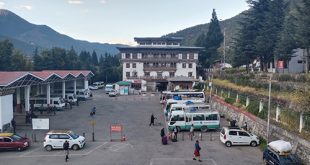
Patients have traveled from places like Babesa, Taba, and even beyond Thimphu. By 6 am, the hospital grounds are already filled with patients waiting in line, hoping for a chance to receive one of the limited consultation tokens issued starting at 8 am.
Tshering Dema, a 29-year-old civil servant, shared, “I reached JDWNRH at 8 am thinking I was on time, but all the tokens were already been taken. I had taken time off from work. I couldn’t wait any longer, so I had to go to a private hospital.”
“I’ve come two times this week, waking up at 6 am each time. I still haven’t seen a doctor,” says a 32-year-old patient from Dechencholing. “I don’t own a vehicle, so each time I travel, I have to bear the vehicle’s burden, but I have no choice.”
Those who live in remote areas of Bhutan face an even greater challenge, as they often have to endure long journeys and long waits.
JDWNRH, as the national referral hospital, is tasked with handling a large number of complex medical cases. Yet, the hospital is struggling to meet the growing demand for healthcare services.
The number of walk-in patients continues to increase, placing additional strain on an already overburdened system. The hospital, which provides services to the entire country, is often the only place where patients with serious health issues can seek care.
The hospital’s management, including staff and doctors, has been working tirelessly to provide care to as many patients as possible. However, with limited resources, the situation remains challenging.
However, the teams working to address the token issues aim to restore patient’s hopes by improving service delivery at JDWNRH. Officials say that meaningful interventions are on the way and that the current challenges will not remain the same for long.
A source from one of the teams said, “This is one of the priorities, and we are in the final stages of the intervention. We believe it will bring back the hopes of the people.”