The Bhutanese Leading the way.
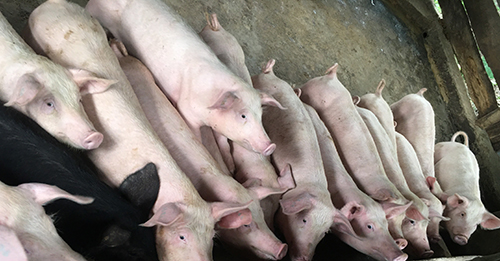
To address the mounting financial crisis among pig farmers, the Ministry of Agriculture and Livestock (MoAL) has introduced a Price Guarantee Scheme (PGS) with a fixed procurement price of Nu 390 per kilogram.
The intervention comes after the Member of Parliament (MP) for Sergithang-Tsirangtoed, Lhakpa Tshering Tamang, highlighted the plight of farmers in Tsirang and other southern districts.
Many farmers have been unable to sell their pork due to weak market demand, high feed costs, and disease outbreaks, leaving them unable to repay loans.
MP Lhakpa gave an example of a person in Semjong gewog who was in dire straits, struggling to repay his hefty credits.
“The price of feed cost him Nu 8.2 million on credit and he hasn’t been able to repay the loan even when he had 500 pigs,” he said.
Furthermore, he added that in areas like Semjong gewog, 192 metric tonnes (MT) pork is still left unsold.
He asked Lyonpo Younten Phuntsho, Minister of MoAL, whether there are any plans to protect pig farmers from financial losses caused by unsold production and if the MoAL has plans to provide cold storage facilities for farmers in the southern district.
One of the major interventions undertaken is the introduction of a structured PGS. Following approval by the Ministry of Finance, the government fixed a support farm gate procurement price of Nu 390 per kilogram to ensure farmers can recover production costs while maintaining reasonable margins.
The Minister noted that while production costs are roughly Nu 336/kg, some farmers were being offered as little as Nu 250/kg by middlemen. The new scheme aims to protect the livelihoods of the 4,376 pig farmers in major pig-producing dzongkhags such as Tsirang, Samtse, Dagana, Sarpang, and Chhukha.
Lyonpo said that between 11th -15th May 2026, approximately 1,000 market-ready pigs (85.75 MT of pork) were harvested from major producing areas, aggregating nearly 85.75 MT of pork worth approximately Nu 33.44 million.
Farmers also received upfront payments at the guaranteed price to ease their financial stress.
The Bhutan Livestock Development Corporation (BLDCL) is blast-freezing the pork and will release it at regulated consumer prices after Saga Dawa to prevent market spikes.
At present, the country already has nine operational blast freezer facilities located across major livestock-producing dzongkhags, including Tsirang, Samtse, Dagana, Chhukha, Wangdue Phodrang, and Samdrup Jongkhar, with a combined blast freezing capacity of approximately 16 MT.
Lyonpo Younten assured that the government recognizes that future expansion of production and value addition may require additional cold storage and meat processing facilities, particularly in southern Bhutan where pig production is concentrated.
Looking ahead, the government plans to utilize its nine blast freezer facilities and 12 cold stores more effectively. There are also long-term plans to encourage private sector investment in processing local pork into value-added products like sausages, bacon, salami, and ham to reduce imports.