The Bhutanese Leading the way.
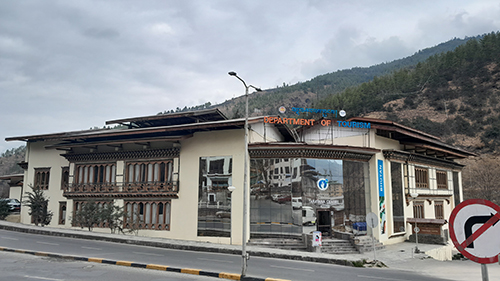
The Minister for Industry, Commerce and Employment, Lyonpo Namgyal Dorji, presented the Action Taken Report (ATR) on the nine recommendations submitted by the Economic and Finance Committee (EFC) on 19th May on the Review Report of the Tourism Policy.
The EFC recommended reviewing the Tourism Levy Act 2022 to clearly define institutional roles, pricing mechanisms, governance, licensing, and regional development measures.
In response, the Ministry of Industry, Commerce and Employment (MoICE) stated that the Tourism Policy 2021, Tourism Levy Act, and Bhutan Integrated Tourism Master Plan 2025–2034 together already provide a strong framework for tourism governance and sustainable development. The ministry said more time is needed to assess the impact of recent tourism reforms before introducing new legislation.
The committee also recommended introducing a flexible Sustainable Development Fee (SDF) framework with discounts and incentives to improve regional tourism and align the SDF rate with legislation.
MoICE stated that the USD 100 SDF supports Bhutan’s high-value tourism policy and helps maintain market stability. The ministry said seasonal or group discounts could create uneven demand and weaken Bhutan’s premium tourism brand.
To improve economic activity in border towns, the committee recommended introducing a 72-hour SDF waiver.
MoICE stated that the current 24-hour SDF waiver has already improved hotel occupancy, visitor spending, and local employment in border towns. The ministry said extending the waiver to 72 hours is not necessary at this stage.
The committee further recommended establishing a single Tourism Authority responsible for tourism policy, licensing, SDF management, and coordination.
MoICE stated that integrating the former Tourism Council of Bhutan into the ministry as the Department of Tourism has improved coordination, accountability, and alignment with national economic policies.
On operational systems, the committee recommended linking all visa applications to licensed Bhutanese operators and developing a one-window digital tourism platform.
MoICE stated that mandatory routing through tour operators would go against the liberalized tourism system, which allows visitors to freely choose tourism service providers.
The committee also recommended reviewing the three-tier airfare pricing system and exploring a uniform airfare model for all nationalities.
MoICE stated that a uniform airfare system could increase ticket prices for Bhutanese travelers. The ministry added that airfare pricing should remain a commercial decision for airlines while supporting tourism growth and connectivity.
To diversify tourism and strengthen community participation, the committee recommended expanding tourism products and providing incentives and capacity-building support.
MoICE stated that several tourism events and experiences were introduced in 2025 to promote tourism beyond western Bhutan and increase local community involvement. Upcoming activities include the Tragopan Fest, Great Yeti Quest, and the Ecotourism Conclave.
The committee also recommended financial relief, marketing support, and incentives for hotels. MoICE stated that the government is providing a 4 percent interest subsidy for eligible hotels, supporting digital booking systems, promoting hotels internationally, and encouraging MICE tourism.
On culture-based tourism, the committee recommended developing policies and guidelines to promote cultural and nature-based tourism. MoICE stated that the Department of Tourism is working closely with relevant agencies and local governments to promote cultural and heritage tourism in line with existing policies and regulations.
The Member of Parliament (MP) for Bartsham Shongphu constituency, Rinchen Wangdi, said that the nine members of the EFC went around the country and have consulted with stakeholders and tourists as well. He said that we need a comprehensive and holistic tourism act and that the Immigration Act, Local Government Act, Labour Act, and Public Finance Act restrict tourism and that the government needs to find a way to harmonise these acts so it boosts tourism.
The MP for Monggar, Naiten Wangchuk, said that out of the nine recommendations provided by the EFC, only two have been fulfilled.
The MP for Radhi Sakteng constituency, Tashi Tenzin, said the government had earlier promised to increase tourist arrivals in dzongkhags that receive fewer visitors and to introduce discounts to support that effort. However, he questioned how the government intended to fulfil that promise based on its current position.
The MP for Choekhor Tang constituency, Kuenzang Thinley, said that there was no reason to be concerned about the shortage of airline seats or tour guides if group and duration discounts were introduced. He said such challenges would arise only with an increase in tourist arrivals and added that the shortage of guides could also create employment opportunities for young people.
The MP for Khamdang Ramjar, Namgay Dorji, said that even though he thanked the government and the dzongkhags for taking up the initiative to start tourism products like the Rhododendron Week in Sheytemi in Trashigang and the Black-Necked Crane Farewell Festival in Trashi Yangtse, the MP said the number of dollar-paying tourists attending the Festival was zero. He questioned whether tourist numbers would increase without stronger incentives and targeted measures.
National Assembly Speaker Lungten Dorji said that tourism products of this nature are largely organised by the dzongkhags, with support from the Department of Tourism. He added that the agencies involved needed to provide a more substantial response on the issue.
Prime Minister Dasho Tshering Tobgay said Bhutan’s overall tourism numbers continue to rise. According to the Prime Minister, 103,068 tourists visited Bhutan in 2023, while 209,376 tourists visited in 2025. In the first four months of 2026 alone, 76,603 tourists visited the country.
Lyonchhen said the government does not view tourist arrivals as a major concern at present, given the upward trend in numbers. He added that despite cancellations caused by the (Iran) war, the government remains committed to increasing tourist arrivals.
The Prime Minister also noted that tourism benefits extend beyond specific regions, as people from across the country reside and work in Thimphu, where most tourists visit. However, he acknowledged the importance of encouraging tourists to travel to the regions and said the government is strengthening its marketing efforts, while tour operators should also play a stronger role in promoting regional destinations.
The House directed the government to carry out a thorough review of the relevant tourism policies, taking into account the discussions held. It also instructed the government to reassess adjustments to the SDF.
For border town facilitation, the House proposed extending the current 24-hour SDF waiver period to 72 hours. In terms of improving operational efficiency, it further recommended allowing tourist routing through licensed tour operators.
On diversification and community involvement, the House suggested that the government work with each dzongkhag to identify at least one distinctive local product and provide the required financial and technical assistance for its development.
The House also welcomed the government’s initiative to support tourism businesses by offering a four percent interest subsidy on loans for one year for Department of Tourism-certified hotels, including three-star and four-star and below establishments.
Regarding policy direction and the promotion of culture-based tourism, the House urged the government to study and explore effective ways to further encourage and strengthen this sector.
Finally, the House instructed that a comprehensive progress report on the implementation of these measures be presented to Parliament during the Seventh Session.