The Bhutanese Leading the way.
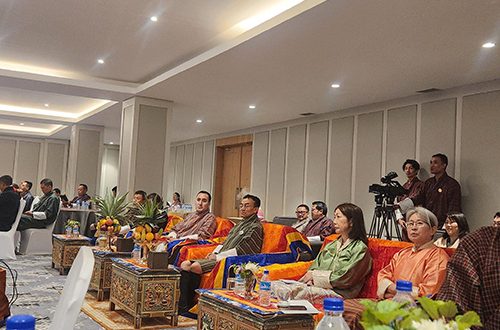
The Ministry of Industry, Commerce and Employment (MoICE) officially launched the Foreign Direct Investment (FDI) Rules and Regulations 2025 on 8th August.
This revised framework consolidates the provisions of the earlier FDI Policy 2019 and FDI Regulations 2019 into a single, comprehensive legal structure designed to simplify and improve accessibility for investors.
According to MoICE, the update aligns with the evolving global investment landscape and aims to position Bhutan as a competitive and attractive destination for foreign investment. The changes focus on creating an enabling, transparent, and investor-friendly environment that supports the country’s national development priorities and the vision of becoming a High-Income GNH Economy by 2034.
At the launch, Lyonpo Namgyal Dorji described the revision as a significant milestone, emphasizing that it is a bold reform anchored in transparency, predictability, and efficiency, expected to inspire investor confidence and catalyze sustainable, high-quality investments in Bhutan.
Key reforms include the provision for leasing state land, including land within industrial parks, to FDI companies for establishing their businesses, with an initial lease term of 30 years, removing the minimum 10% shareholding requirement for individual foreign investors, allowing up to 100% foreign equity in sectors such as agriculture, relaxing foreign exchange access rules, and introducing investor card benefits. The rules also provide clearer provisions for FDI in downstream projects, including venture capital investments in startups.
These changes follow a review process that involved consultations with relevant agencies and the private sector to address challenges faced by foreign investors.
One issue identified was the overlap and repetition between the previous FDI Policy 2019 and FDI Regulations documents, which led to confusion and complexity for users. To address this, the two documents have been merged into a single set of FDI Rules & Regulations 2025.
Among the changes, the earlier condition that required individual foreign investors to hold a minimum 10% share has been removed, particularly benefiting large-scale projects. Foreign investment in existing entities, previously capped at 74% foreign equity, is now allowed without specific conditions, subject to sectoral caps.
The prior requirement to lock foreign equity for three years after licensing has been lifted to offer greater flexibility to investors. The department has also taken steps to simplify the process of obtaining Foreign Direct Investment Registration Certificates (FDIRC), reducing the turnaround time from five to three working days.
The new rules explicitly encourage FDI in downstream projects, allowing investments through venture capital firms to support local startups. These investments will not be classified as FDI projects, enabling startups to access foreign capital and expertise without full FDI registration.
Access to foreign exchange is expanded, allowing FDI companies to use convertible currency and Indian Rupees from the Royal Monetary Authority (RMA) for capital goods and operations, with the ability to repatriate dividends and capital without restrictions.
Investor cards have been introduced, providing benefits not available under previous policies, while route permits for foreign investors and their representatives will be facilitated for up to three months or the duration of their stay.
The previous obligation for FDI companies to employ five locals for every expatriate has been removed, allowing foreign workers to be hired when skilled locals are unavailable.
The list of priority sectors has been reviewed and broadened, with additional sectors open to 100% foreign equity, including agriculture. The list is now more flexible, allowing activities similar or related to those on the priority list to be considered for priority status.
The activities listed under the priority list are Agriculture and Animal Husbandry, Manufacturing, Education, Health, Hotels/Resorts, Air Transport Services, Infrastructure, IT/IT-Enabled Services, Waste Management, and Financial Services.
The negative list in which no FDI is allowed is news media, distribution services like wholesale, retail and micro trade, mines for sale of mineral in raw form, mineral processing up to crushing and powdering, hotels of 3 star and below, general health services, industries that do not meet certificate of origin requirements, real estate business and activities in the prohibited list of the government.