The Bhutanese Leading the way.
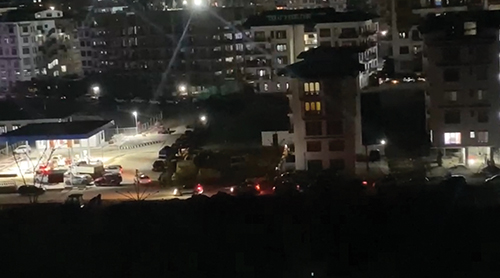
When the government gave the last fuel subsidy of Nu 16 per liter of diesel on 21st March, it was expected to cost around Nu 5 million (mn) a day, and Nu 1 billion (bn) was kept aside till 30th June 2026.
From the introduction of the National Fuel Price Stabilization Framework (NFPSF) on 22nd March to 1st April 2026, a subsidy amount of Nu 65.84 mn was disbursed, which corresponds to a per-unit subsidy of Nu 16 per liter for diesel.
However, there was a huge increase in fuel prices from the Oil Marketing Companies in India, which meant that the new fuel prices in Thimphu from 1st April should be Nu 114.31 per liter of petrol and Nu 174.13 per liter of diesel.
However, with the government giving fuel subsidy, prices have been set at Nu 98.00 per liter of petrol and Nu 98.31 per liter of diesel. This means a huge subsidy of Nu 16.31 per liter on petrol and subsidy of Nu 75.82 per liter on diesel.
A Ministry of Finance (MoF) official said the subsidy bill comes to Nu 1.3 bn per month. Over two months, the cost could reach Nu 2.6 bn or more.
To deal with the first month, the government will be reappropriating Nu 1 bn from the Economic Stimulus Plan (ESP). This ESP money will be taken from the money released to various government ministries.
Apart from the ESP, the annual budget may take a big hit if the fuel prices remain elevated.
The government may consider reallocating unspent budgetary funds, scaling back certain programs, or, if necessary, increasing the fiscal deficit target from 3 percent to 4 percent or even 5 percent, which would raise public debt. The fiscal deficit refers to money being spent beyond the available revenue in the annual budget.
The MoF official said that if the situation worsens with the Iran War and prices shoot higher or remain high for an extended period then the subsidies could become more targeted, like giving subsidies to only certain sectors like public transport and the transport of goods or logistics.
An official said, “A total of Nu 1 billion was reappropriated from ESP to NFPSF to provide a subsidy for macroeconomic stabilization. However, given the significant global headwinds, prices and subsidies will be reviewed every fortnight. In the event that subsidy disbursements exceed the allocated budget, the government will explore a combination of policy measures, including prioritization and reallocation within existing public resources, targeted expenditure rationalization, and prudent exploration of fiscal space, including calibrated use of the fiscal deficit where necessary.”
The subsidy is being provided under the NFSPSF introduced on 21st March 2026. The framework initially set a ceiling price of Nu 92 per liter, above which subsidy would apply. With the recent surge in prices, the ceiling price was increased to Nu 98 per liter and may be revised further.
Apart from the above, there are efforts to reduce the consumption of fuel.
The Prime Minister issued an executive order on 2nd April 2026 saying that in light of the rising cost of fuel and its impact on the national exchequer and the economy, the Royal Government directs all public sector agencies – ministries, constitutional bodies, judiciary, local governments, autonomous agencies, DHI companies, Royal Monetary Authority, state-owned enterprises and financial institutions to immediately initiate ‘Walk to Office,’ and ‘Remote Work’ to curb fuel consumption.
The order said the Royal Civil Service Commission (RCSC) will develop and issue appropriate guidelines for the effective operationalization of ‘Walk to Office’ and ‘Remote Work’ for all public sector agencies.
The government also requested all public sector agencies to avoid non-essential travel and to prioritize virtual meetings over physical gatherings.
The private sector is likewise encouraged to adopt similar measures to rationalize fuel usage and support the national effort.
The government acknowledged and thanked the Government of India for ensuring uninterrupted supply of POL and LPG despite global supply chain disruptions.
One way for the NFPSF to recover some money in the future is that when oil prices go down sharply in the future, it can keep a small margin above the floor price to build a buffer for such future shocks.
The Bhutanese, meanwhile, has confirmed with the Nepal Oil Corporation that Bhutan and Nepal are receiving almost the same fuel price charges from the fuel companies in India, which means Bhutan is not being overcharged over Nepal like before in 2022.
The landing price of petrol in Phuentsholing before taxes, dealer charges and transportation is Nu 97.83 per liter for petrol and Nu 152.90 per liter for diesel. In Nepal it is Nu 95.95 per liter for petrol and Nu 151.60 per liter for diesel. Nepal, like Bhutan, is selling both petrol and diesel at a loss.
In 2025, Bhutan imported Nu 13.595 bn worth of diesel and Nu 5.221 bn worth of petrol and jet fuel.
In 2024, diesel imports stood at Nu 11.211 bn, while petrol and jet fuel imports were valued at Nu 3.958 bn.
This shows a rapid increase in fuel imports between 2024 and 2025.
On LPG, the Department of Trade said the LPG supply situation is stable, and Bhutan continues to receive uninterrupted LPG supplies from Indian supply terminals.
However, there have been two price revisions mainly for non-subsidized LPG and commercial LPG since the onset of the Middle East conflict. The first revision took place on 7th March 2026, and the second on 1st April 2026.
As a result, the LPG rate in Thimphu after 1st April is subsidized LPG (14.2 kg) at Nu. 1,130 per cylinder (refill cost) with no change and in fact a Nu 1 fall in price.
The non-subsidized LPG (14.2 kg) price has increased from Nu 1,358 to Nu. 1,506 per cylinder.
The white commercial LPG (19 kg) price has increased from Nu 2,463.54 to Nu. 2,683 per cylinder.