The Bhutanese Leading the way.
The current fuel shock and huge fuel subsidies of Nu 1.3 bn a month will hit Bhutan’s finances hard.
It exposes in many ways the economic fragility of Bhutan and also areas where we can improve on.
For a long time, Bhutan enjoyed cheap fuels prices from April 2023, in part due to investigative reporting by this paper that exposed how we were being charged much more than Nepal and subsequently corrective actions were taken.
We saw fuel going as low as Nu 60 a liter but this advantage was squandered away. Bhutan should have imposed higher fuel taxes at the time so that the government could retain some buffer.
Now the National Fuel Price Smoothening Framework (NFPSF) is an opportunity to build that buffer and fiscal space in the future when oil prices come down.
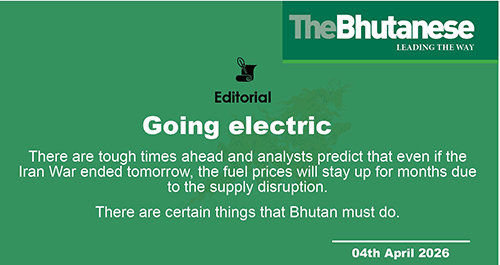
There are tough times ahead and analysts predict that even if the Iran War ended tomorrow, the fuel prices will stay up for months due to the supply disruption.
There are certain things that Bhutan must do.
We must massively invest and improve our public transportation system. We must also invest in more electric cars and introduce facilities like charging stations.
We must also improve urban planning so that less cars need to be used.
Bhutan must use its hydropower advantage and incentivize businesses that use fuel for its energy to switch to electricity. Some of the biggest guzzlers of diesel are industries and here a switch can make a major impact.
We also need to reduce our reliance on LPG gas and encourage alternatives like induction cookers.
Bhutan is lucky so far to not suffer shortages like in other parts of the world and this is in large part due to India having enough reserves. We must think about what to do if India runs out and if there can be alternate suppliers.
“There can be no sustainable development without sustainable energy development.” — Margot Wallstrom