The Bhutanese Leading the way.
Beyond Grade VIII, Students Will Still Need to Travel Elsewhere for Higher Secondary Education
For children growing up in the remote highland community of Merak, continuing education beyond primary school has often meant leaving behind their families, homes, and familiar surroundings.
After completing Class VI, students previously had to move to other schools in different gewogs or dzongkhags to continue their studies. For many young students, this meant adapting to a new environment and living away from their parents at an early age.
This year, however, that journey has become slightly shorter.
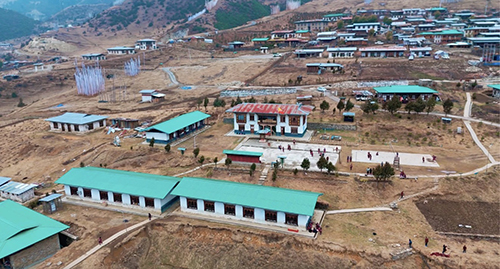
Merak Primary School was upgraded to a lower secondary school at the beginning of this academic session in February, allowing students to continue their education up to Class VII. From the next academic session, the school will add Class VIII, enabling students to remain in their community for an additional year.
The officiating principal, Tashi Palden, said the upgrade was necessary due to the growing population in Merak.
“There are more people in Merak, so the school had to be upgraded,” Tashi said.
He explained that although a lower secondary school is expected to provide education up to Class VIII, the school currently offers classes only up to Grade VII. “From next year’s academic session, Grade VIII will also be added,” he said.
The addition of higher grades has brought relief to students and parents, especially those from highland families whose lifestyles often require them to spend extended periods away from home.
Merak is known for its yak-herding tradition, with many families depending on livestock and spending time in highland pastures. Because parents and guardians often have to travel and stay away while taking care of their yaks, ensuring that children have access to education close to home remains a challenge.
To support these families, the school provides boarding facilities for students. Currently, 53 students are staying as boarders.
“Parents or guardians have to look after their yaks and live far away, so students are also provided with boarding facilities,” Tashi said.
The school’s upgrade has also contributed to an increase in student enrolment.
When the school functioned as a primary school, it had 157 students. This academic year, the number has increased to 174 students.
The school currently has nine teachers, including the officiating principal, who continue to support students under the Cambridge curriculum. Teachers at the school have also received training to implement the Cambridge curriculum.
While the school has expanded its academic levels, it has not required major new construction. Tashi said the existing infrastructure was sufficient to accommodate the additional grades.
Instead, improvements were made to enhance the learning environment. The school underwent renovation works, including roofing improvements, electrical rewiring, and the installation of air conditioners and heaters.
“The school has been renovated with ACs and heaters, roofing, and wiring, and it has become much better for the students,” Tashi said.
For students who completed Class VI last year, the upgrade has meant they can continue studying in their own community instead of moving elsewhere. Similarly, students currently in Class VII will be able to continue to Grade VIII from next year.
However, the upgrade does not completely remove the challenges faced by students in the remote community. After completing Class VIII, students who wish to pursue higher grades will still have to leave Merak and enrol in middle or higher secondary schools in other dzongkhags.
For highland families, sending children away for education remains a difficult transition. While the expansion of Merak School provides students with more time in their own community, the need to travel for higher education continues.
The introduction of Grade VIII marks an important step towards improving access to education in Merak. For students who once had to leave home after primary school, the additional year provides more opportunities to learn, grow, and remain connected to their community before taking the next step in their educational journey.
However, after completing lower secondary education, students will still have to leave their community to pursue higher grades.
Those wishing to continue to Class IX and beyond will need to enrol in middle secondary or higher secondary schools located outside the gewog, requiring them to once again adjust to a new environment away from their families.