The Bhutanese Leading the way.

The Ministry of Industry, Commerce and Employment (MoICE) said that from 2024 to 2025 the government has given employment opportunities to around 8,274 job seekers and requirement was around 12,871 jobs and between this and next year they will create around 15,611 jobs with MoICE creating 11,250 jobs and DHI, private sector and others doing the rest at 4,361
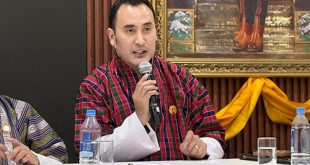
The MoICE Minister, Namgyal Dorji, said that the youth unemployment rates of 20.85 percent in 2026 and 21.78 percent in 2027 are a concern, but not unprecedented.
Youth unemployment peaked at 22.9 percent in the first quarter of 2024 and climbed as high as 28.6 percent in 2022. According to the MoICE Minister, the real issue lies in structural challenges, including more young people entering the labor force, mismatches between skills and available jobs, and the clustering of opportunities in only a few urban centres.
To address the immediate pressures, MoICE has adopted what it calls the Three Gems approach to employment creation. The first gem is creating a vibrant startup and entrepreneurship ecosystem through training, incubation programs, startup financing, and market linkages, enabling young Bhutanese to become job creators rather than just job seekers.
The second gem is accelerating and driving meaningful employment through initiatives, such as the Employment Responsibility System, that coordinates agencies around shared job targets, the Youth Engagement and Livelihood Program that provides wage subsidies and work experience, the Overseas Employment Program that offers skills and exposure abroad, and the National Reintegration Program that supports returnees and laid-off workers to re-enter the economy.
The third gem is creating a robust labor market intelligence system by leveraging the Labor Market Information System, career guidance toolkits, bootcamps, and platforms like GOWA, ensuring young people have accurate information about opportunities and pathways.
Lyonpo Namgyal Dorji also pointed to the Industrial Development Roadmap 2025, which was launched to ensure that economic growth translates into real jobs for Bhutanese youth in ten high-potential sectors. He said the Roadmap is designed as a bridge between the broad aspirations of the 21st Century Economic Roadmap, and specific program interventions that deliver jobs year by year until 2035.
Through the Roadmap, MoICE has committed to generating more than 65,000 industrial jobs by 2035. By 2026, the Integrated Business Licensing System will cut the time it takes to start a business. The proposed Industrial Development Finance Facility will provide concessional finance to cottage and small industries and youth- or women-led enterprises. From 2026 onwards, new trade agreements and market-access arrangements are expected to help firms grow. By 2027, the tourism industry is projected to stabilize, including perceptions around the levy policy, making it a reliable source of fast job creation. Into the 2030s, renewable energy and data-center investments are expected to generate thousands of steady, high-skill opportunities.
Lyonpo Namgyal Dorji said that while forecasts show continued challenges, the government’s strategy is clear. The 21st Century Economic Roadmap sets the vision, the Industrial Development Roadmap translates that vision into programs, and the Three Gems approach provides a way to manage immediate pressures while building for the future.