The Bhutanese Leading the way.
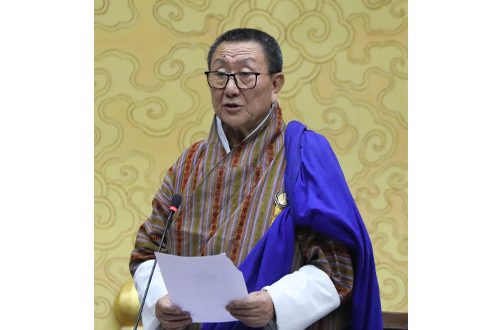
On Friday 12th June, the National Assembly (NA) endorsed a proposal to reduce the Goods and Services Tax (GST) from the originally planned 7% to 5%, following a recommendation by the Economic and Finance Committee (EFC). The decision was passed through a majority vote by a show of hands.
South Thimphu MP, Tshewang Rinzin, explained that although the initial plan was to levy a 7% GST on all goods, excluding 52 exempted items, reduced from the originally proposed 257, the EFC had engaged in extensive deliberations, often late into the night, before arriving at the final recommendation.
EFC initially proposed a 5% GST with exemptions for three essential goods, which were rice, oil, and salt. During the discussion, the Education Minister, Yeezang D Thapa, suggested that sanitary pads also be exempted, stating that it is a necessity for girls and women.
Following a tea break, EFC revised its recommendation to include two additional items, sanitary pads and wheelchairs. This brought the total number of GST exemptions to five: rice, oil, salt, sanitary pads, and wheelchairs.
Lamgong-Wangchang MP, Sonam Tashi, said that GST is essentially a restructuring of existing taxes and that the reduction from 7% to 5% would mean lower taxes overall, rather than an additional burden on taxpayers.
Electricity will also be taxed at 5%, similar to other goods and services. However, the Minister of Energy and Natural Resources advocated for electricity to be exempt, arguing that while taxation is vital for national development, electricity should remain untaxed. Despite this, Parliament passed the 5% GST on electricity.
The Minister for Industry, Commerce, and Employment pointed out that tax rates are generally difficult to increase once set, and starting the GST at 5% could make it challenging to raise it to 7% in the future if needed.
Ultimately, the Parliament unanimously agreed to implement a 5% GST with five exemptions, and electricity will be taxed at the same rate.
Kengkhar-Weringla MP, Dorji Wangmo, thanked the committee for including sanitary pads in the exemption list, stating their essential role in women’s health.
Economic and Finance Committee Chairperson, Rinchen Wangdi, emphasized that a well-structured GST system would improve Bhutan’s overall tax culture in the long term.
Supporting this view, Finance Minister, Lekey Dorji, informed the Parliament that the GST system is being developed by Data Talk, a New Zealand-based company known for its expertise in system development. He assured the Parliament that the government is providing sufficient funding for the project.
Lyonpo Lekey Dorji also made a personal commitment, stating that if the GST system is not implemented by 1st January 2026, he would take full responsibility and step down from his position. He stressed the importance of taking accountability for actions in the public service.
The GST (Amendment) Bill is scheduled to be adopted on Monday 16th June.