The Bhutanese Leading the way.

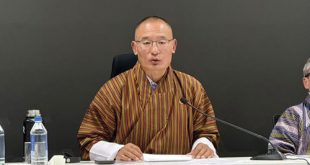
The Finance Minister Lekey Dorji shared the government’s rationale for re-introduction of tax on interest income earned through Fixed Deposit.
He said the Income Tax Act of Bhutan 2025 proposes to levy a 10% tax on interest earned through fixed deposit. The tax is on interest income only, not on the Fixed Deposit principal. It is drawn on the principles of equity, investment neutrality, social justice and fiscal sustainability. The objective of the proposal is to ensure that all forms of income – whether from employment, business or capital— are treated fairly, without unduly distorting savings behavior or investment decisions.
Some information on the current FD holders
He said there are currently some 12,933 FD holders with a principal amount of 18.558 billion (bn) taking home an interest income of 1.459 bn a year. Levying 10% final withholding tax would generate a modest revenue of Nu.145 million (mn) yearly.
382 Fixed Deposit holders own 10 mn or more fixed deposits and these are majority holders of 18.558 bn: the next is 474 FD holders owning 5 mn or more but less than 10 mn; the next 3,310 FD holders own 1 mn or more but less than 5 mn; the next 9,152 FD holders own 0.1 mn or more but less than 1 mn; and the next 3,089 FD holders own less than 1 lakh fixed deposits.
Lyonpo said the 10% tax is only on fixed Deposits, and no taxes on Recurring Deposits or Saving accounts. Savings accounts in five commercial banks account for a min of 23% to 49% while the Fixed Deposit accounts is from 32% to 69%.
According to a source, who requested for anonymity, the 382 accounts own Nu 6.331 bn of the fixed deposits and 474 accounts own Nu 2.998 bn of the fixed deposits. This means that a total of 856 accounts own Nu 9.329 bn of the fixed deposits which is around half of the total fixed deposits. This means these 856 accounts are drawing an annual fixed deposit tax free income of Nu 700 mn plus.
The same source said there are seven fixed deposits of Nu 100 mn plus each and one fixed deposit holder has well above Nu 300 mn in fixed deposits.
Economic Consideration
Lyonpo said taxing interest income upholds the principle that those with greater ability to pay should contribute more. Fixed deposit interest is largely earned by higher-income individuals who can accumulate substantial savings; bringing that unearned income into the tax net strengthens the progressive nature of the system. At the same time, broadening the base to include interest income allows Bhutan to reduce the tax rate and slab, and reliance on a small group of taxpayers and generate stable revenues over the economic cycle. This approach aligns with IMF recommendations that emphasize comprehensive income taxation as the most efficient and equitable design.
Ensuring Investment-Neutral Taxation
He said when capital income such as interest is exempt or taxed less favorably than other income types, investors have a clear incentive to favor low-risk fixed deposits over riskier, growth-oriented ventures.
“This tax-driven bias can divert funds away from productive sectors—manufacturing, services, agriculture and infrastructure—where they would generate higher returns for the economy and create jobs.”
He said tax policy should be neutral, letting commercial considerations rather than tax differentials guide investment decisions. By harmonizing the tax treatment of interest with that of other incomes, Bhutan can encourage savers to channel capital into projects that support job creation, innovation and sustainable development.
Social Equity Consideration
Lyonpo said exempting interest income tends to benefit wealthier households disproportionately, exacerbating inequality.
He said low-income earners generally hold minimal bank deposits and derive most of their income from salaries, which remain taxable.
“In contrast, high-net-worth individuals can earn significant passive returns without contributing to public revenues. Including interest income helps remove this regressive feature, ensuring that every citizen pays tax in line with their overall income.”
Reinforcing Fiscal Self Reliance
Lyonpo pointed out that Bhutan’s medium-term development goals and Five-Year Plans require reliable domestic resources.
Hydropower and external grants, while important, are subject to volatility and long-term uncertainties. Having graduated from the LDC, Bhutan has less access to grants and concessional funds.
“A modest tax on interest income taps an existing revenue stream, enhancing fiscal self-reliance and reducing the need for debt financing.”
Global Best Practices
Lyonpo said nearly all countries treat bank deposit interest as taxable income, in line with comprehensive income tax frameworks. Only a handful of jurisdictions exempt interest income. Bhutan’s move to tax interest would therefore align it with global norms, strengthening the integrity and perceived fairness of its tax regime.
Counterarguments and responses
Lyonpo said critics argue that taxing interest discourages savings. International experience, however, shows that low rates (5–10 per cent) on interest have minimal impact on overall deposit growth when real returns remain attractive.
For example, when Bhutan had a 5% TDS on interest, bank deposit growth remained healthy, and in India and Nepal, for example, deposit volumes continued to rise despite the introduction of withholding tax on interest.
He said critics may also argue that there is double taxation on the same income.
“However, taxation applies only to net income; invested principal is not taxed twice. When income is generated through business activity, only the net profit after deducting allowable expenses is subject to personal income tax. If this profit is subsequently reinvested, the original capital remains untaxed and only the interest earned is liable to tax. This treatment aligns with international practice and ensures that income is not taxed more than once.”
He said incorporating fixed deposit interest is justified across multiple dimensions. It strengthens equity by aligning tax burdens with ability to pay, promotes investment neutrality by preventing tax-driven distortions, advances social justice by reducing regressive loopholes and underpins fiscal sustainability through base broadening. Internationally, this step is commonplace and regarded as best practice for a modern, comprehensive tax system.
“In Bhutan, the RGOB spends over 30% of the annual budget on social sector like health and education. The current fiscal reform envisages investments, job creation and risk-taking. It is pro-investment and also takes long-term interests of the nation – provides tax deductions and incentives for child care, home ownership, and disability reliefs.”
He said the Royal government is thinking bold, thinking medium-term and long-term.
“Political parties usually don’t do that. No government wants to be unpopular by introducing new taxes but we have to think long term. Let us not politicize taxes; Let us listen to economists and experts; and Let us love our country intelligently. Governments may come and Governments may go, but this tiny nation of ours, built on the hard work and sacrifices of our beloved Kings and our forefathers before us, must go on and on. And our children should inherit a country that is solvent and sustainable.”
He said out of the eight South Asian countries, only India and Bhutan seem solvent now, the rest six require IMF/World Bank/ADB bailout.
“If we are not careful, we could be there too. Public debts shouldn’t be just an election concern, and we should not in-debt the future of our children. 21st century economic roadmap: a vision of 10X GDP counts on private sector to generate 60% of that economic growth. 10% tax on fixed Deposit is a small start. It is just 145m a year. While playing nyamchung or poor card sounds good, this 10% tax mostly affects those rich and wealthy who take home hundreds of millions of income from Fixed Deposits tax free. Just think,” said Lyonpo.