The Bhutanese Leading the way.
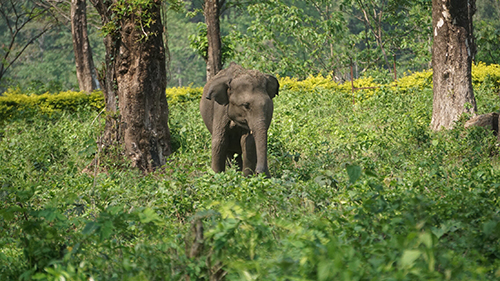
During the second round of the Question Hour session, the Member of Parliament (MP) of Shompangkha constituency, Dr Tek Bahadur Rai, questioned the Minister of Energy and Natural Resources Lyonpo Gem Tshering on the issue of human-wildlife conflict and how it leads to destruction of crops, property, and at times, the tragic loss of human life.
The MP said people in the southern region live in fear due to elephants raiding villages, creating disturbances and raising safety concerns for the people, especially at night.
The MP added that it has become one of the main reasons for leaving agricultural land fallow and contributing to gungtongs.
As per the Forest and Nature Conservation Act of Bhutan 2023, Chapter 5, Section 119, on the payment of compensation. It states that “the Government shall institutionalize appropriate measures, including compensation, to address the loss of human life, permanent disability, and damage to property, crops, and livestock caused by wildlife”.
Dr Tek Bahadur Rai said that while enquiring with local government officials, they were not aware of any instances where the public received such a compensation from the government. Thus, he asked the Minister how the government has been acting under the provisions of the act.
Lyonpo Gem Tshering answered that while human-wildlife conflict related to crops is fortified with damage compensation, chainlink fencing initiatives, and the crop and livestock insurance policy, there is no compensation or support for loss of human life, apart from the collection of semso.
Lyonpo said, “There is a risk to human life in different parts of Bhutan where animals like elephants, leopards, and bears pose threats to people. There is a need to implement a new framework for the compensation for risks to human life.”
Therefore, with the Ministry of Home Affairs (MoHA), Lyonpo said that they are currently in discussion of the rollout of a new system called the “National Human-Wildlife Casualty Relief and Accountability Framework,” as a support mechanism to the affected.
The MP from Mongar, Naiten Wangchuk, suggested the need for a collaboration between India and Bhutan regarding elephant conservation as elephants often wander and group in both Bhutanese and Indian territories seeking better pastures.
He also stressed the importance of studying elephant habitats, to check whether there are enough food and water sources for the elephants, and that Bhutanese farmers can adopt a practice similar to one in Thailand where farmers grow elephant feed on fallow land, and sell them to elephant keepers.
The Opposition Leader Dasho Pema Chewang said that the provision is from 3 years ago and that the government failed on its part to implement it sooner. Additionally, he asked the Minister when the framework will be made and from when it can be implemented.
Lyonpo Gem responded that the National Human-Wildlife Casualty Relief and Accountability Framework has been created, and it will be rolled out soon to support the disturbance caused to the affected people.