The Bhutanese Leading the way.
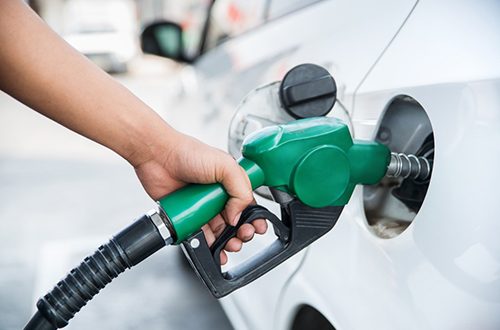
The latest change in the fuel prices effective from August 1, has seen a significant increase in diesel and petrol prices for Bhutan.
The actual price of diesel in Thimphu at the pump should be Nu 123.13 per liter, but after a Nu 18.63 price support per liter from the government, people are only paying Nu 104.50 per liter.
The price of diesel was previously Nu 95.56.
There has also been a significant increase in petrol prices from the source, due to which the government is no longer charging the additional Related Adjustment Factor (RAF) price on petrol.
It was earlier an additional Nu 11.81 per liter over and above the normal rate as the RAF for petrol to recover the Nu 1.823 billion (bn) spent on earlier fuel price support.
For diesel users, the RAF burden was only Nu 2.62 per liter, which has now instead converted into a support.
Petrol, which was earlier Nu 85.06 per liter, is now Nu 99.17 per liter.
The increase in prices is due to the higher prices charged by Indian Oil Marketing Companies (OMCs).
To get an idea, the invoice price for diesel at the border before any taxes, local transportation, charges, and commission is Nu 106.88, when it was earlier Nu 82.11 per liter.
For petrol, it is Nu 84.07 at the border, when the earlier price was Nu 71.44 per liter.
In short, the high increase in prices from the OMCs means that instead of using lower prices to recover earlier price support, the government is now forced to stop that for both petrol and diesel and instead support the price of diesel.
The increase in prices is mainly due to the ceasefire between Iran and USA being broken again recently at the Strait of Hormuz, pushing up prices and tightening supply.
India’s crude oil basket price, or the rate at which it buys crude from the international market, has increased from USD 74.11 per barrel in the first half of July to USD 82.04 in the second half of July and USD 85.55 in early August.
However, Bhutan does not get fuel from India at crude oil prices. Instead, Indian Oil Marketing Companies (OMCs) price petrol against the 92 RON Singapore Gasoline benchmark, which represents the price of processed petrol loaded onto ships in Singapore. This is the Asian benchmark for commercial export markets.
The average price under this benchmark was USD 98.09 in the first half of July, but it has gone up to USD 106.78 in the second half of July and USD 104.64 in early August, which explains the hike. It is on this rate that Indian OMCs add transportation, marketing, and other operational margins before selling fuel to Bhutan.
Diesel is priced against the Arab Gulf Gasoil benchmark, which reflects the price of processed diesel loaded onto ships in the Middle East. The average price in the first half of July was USD 121.28 per barrel, but it has gone up to USD 136.05 in the second half of July and USD 142.24 in early August, which also explains the hike. Here too, Indian OMCs add their respective margins.
Geopolitical tensions in the Middle East, particularly around the Strait of Hormuz, along with surging global demand, have inflated these Asian refined fuel benchmarks.
Consequently, Bhutan’s domestic price hike is an unavoidable consequence of its exposure to international energy market disruptions, forcing the government to absorb the impact through direct price support to shield consumers.