The Bhutanese Leading the way.
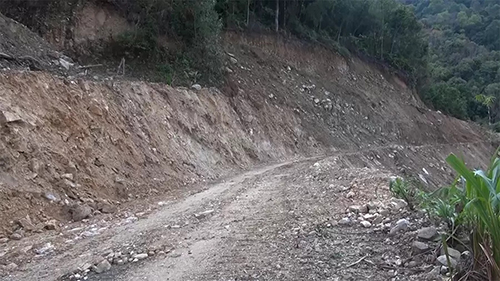
As monsoon rains continue to cause widespread damage to farm roads across Bhutan, Local Governments (LGs) are finding it increasingly difficult to manage the financial burden of restoration using their existing block grants. The issue, highlighted in a written question submitted by the Member of Parliament from the Kilkhorthang-Mendrelgang Constituency, has sparked renewed debate on the need for a separate budget allocation specifically for monsoon restoration works.
In his submission, the MP pointed to the financial strain faced by gewogs such as Barshong and Padtshaling in his constituency. “Barshong Gewog spent Nu 4.5 million and Padtshaling Gewog spent Nu 3.5 million on monsoon restoration,” the MP noted. “This led to budget shortages that affected the implementation of planned activities.”
Currently, all monsoon-related restoration works are funded from the regular gewog block grants. If these funds fall short, additional support may be sought from the dzongkhag grant or, in some cases, disaster management funds. However, this ad-hoc approach has proven inadequate, especially when large-scale damages result from increasingly severe monsoon events.
In response to the MP’s concern, the Ministry of Infrastructure and Transport (MoIT) clarified that the current system of budget allocation is based on the approved Five-Year Plan (FYP) outlay for each budgetary agency. While acknowledging the growing infrastructure demands at the local level, the government pointed out that the Resource Allocation Framework (RAF) for gewogs has increased from Nu 12 billion in the 12th Five Year Plan (FYP) to Nu 13 billion in the 13th FYP.
Despite this increase, the ministry confirmed that there is no separate budget earmarked for monsoon and disaster-related restoration works in the overall plan outlay except for specific allocations under the Department of Surface Transport (DoST), MoIT for Dzongkhag Roads, National Highways, and Primary National Highways.
This means that gewogs and other local agencies must continue to prioritize restoration and reconstruction within their existing budgets. The Annual Grant Guidelines 2024, aligned with Local Government Key Result Area (LGKRA) 7 which focuses on citizen-centric and efficient service delivery, direct LGs to prioritize such activities from their annual capital block grants.
However, the government reassured that immediate disaster relief and response efforts will still be supported through the Disaster Financing Guidelines developed in collaboration with the Department of Local Governance and Disaster Management (DLGDM) under the Ministry of Home Affairs.
As Bhutan experiences more frequent and intense monsoon events, LGs and elected representatives are urging the central government to reconsider its current approach and explore the possibility of creating a dedicated fund for disaster-related infrastructure restoration, especially for critical rural connectivity like farm roads.