The Bhutanese Leading the way.

Bhutan had gifted a 1.5-acre plot of land to Bangladesh for the construction of its embassy in Hejo, symbolizing the growing partnership between Bhutan and Bangladesh.
The groundbreaking ceremony for the Bangladesh Chancery Complex and Ambassador’s Residence took place on 27 November 2023, and after years of careful planning and construction, the complex is now finally complete and set to be officially inaugurated on 9 September 2025.
The complex has captured widespread interest, drawing admiration for its innovative design. The principal architect of the Bangladesh Chancery Complex and Ambassador’s Residence is Prof. Rafiq Azam, a world-renowned architect.
The project was led by SHATOTTO Architecture for Green Living in association with Progressive Research and Consultancy Services, Thimphu, and ideas-iftekhar & design associates pty. Ltd.
Overseeing the construction, Md. Oahedul Islam Mamun served as the Supervision Engineer, managing both construction and detailed supervision. Additionally, Rebecca Gurung contributed as the senior project architect, playing a key role in translating the design vision into reality.
Vajra Builders was the contractor for the project completing it on schedule despite challenges.
The Embassy explained that the project integrates artistic motifs, architectural features, and natural elements such as sunlight and wind, creating a space that celebrates the shared heritage and historical ties of Bhutan and Bangladesh.
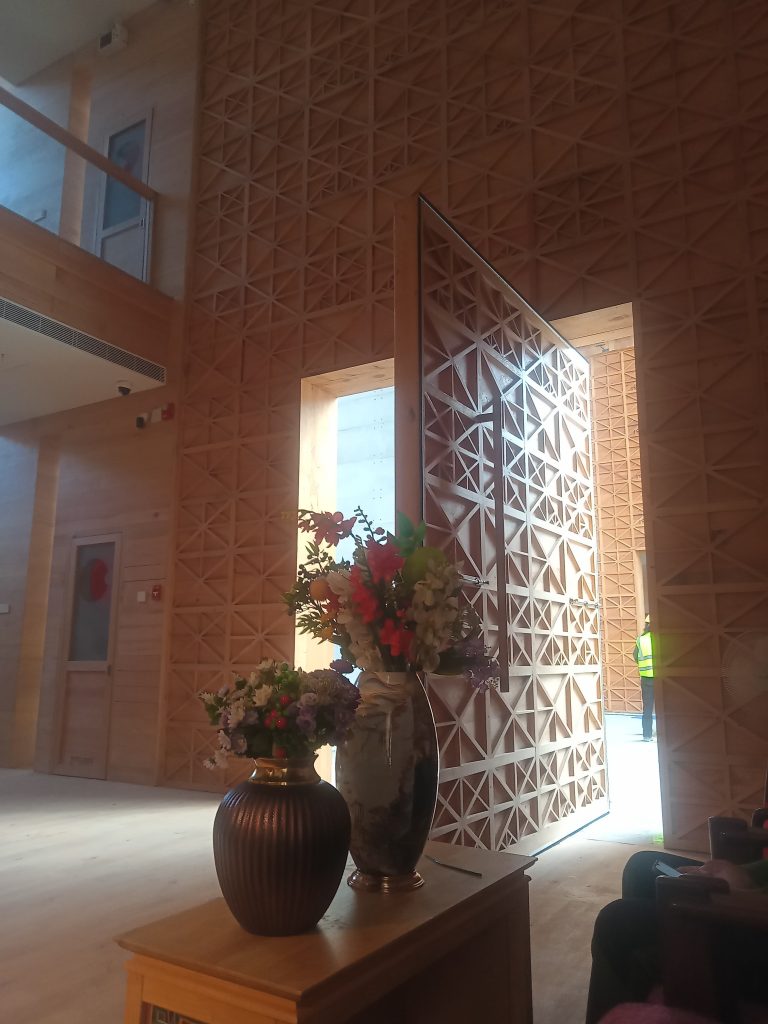
According to the Bangladesh Embassy, this building is a distinctive architectural landmark in Bhutan, notable for its fair-faced concrete facade and environmentally conscious design.
It is the first of its kind in Bhutan to feature a fair-faced concrete facade, giving it a unique and symbolic presence. The design thoughtfully combines modern architectural elements from Bangladesh with Bhutanese traditional styles, reflecting a harmonious blend of cultural and contemporary influences.
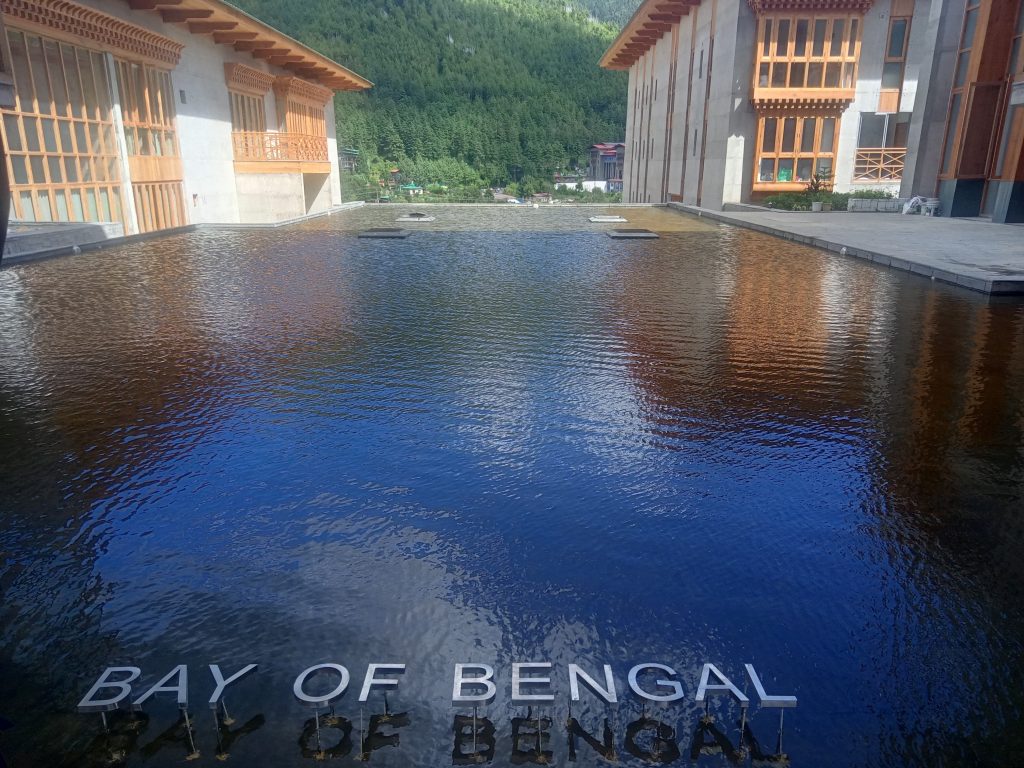
The design was guided by four central ideas: the long-standing connection through Himalayan waterways that flow into the Bay of Bengal, the influence of the Bangladeshi Buddhist scholar Atish Dipankar (Atisa) on Bhutanese religious traditions, the local climate, which allowed for sustainable heating solutions, and careful attention to Bhutanese architectural regulations and cultural context. These elements were combined to create a complex that is visually striking, environmentally considerate, and culturally meaningful.
According to the Bangladesh Embassy, the country receives water from over 1.5 million square kilometers of the Himalayan catchment area through river systems that ultimately flow into the Bay of Bengal. This long-standing hydro-geographical connection has created a unique “creator-receiver” relationship between Bhutan and Bangladesh, shaped over more than 30 million years.
This reflective natural link inspired the architectural design of the Bangladesh Chancery Complex and Ambassador’s Residence. The project incorporates elements that symbolize the flow of water from the Himalayas to the Bay of Bengal, reflecting the historical and geographical ties between the two nations.
In a conversation with The Bhutanese, Md. Oahedul Islam Mamun, the Supervision Engineer, said, “The successful completion of this project is a moment of pride and accomplishment for all stakeholders involved.” He also said, “For the Embassy, this new premise symbolizes the growth of Bangladesh’s diplomatic representation and the fostering of deeper cooperation with Bhutan.”
According to him, the construction faced several challenges, including Bhutan’s mountainous terrain, seasonal constraints such as heavy monsoon rains and harsh winters, and logistical issues in transporting materials to the remote site. However, the complex was completed within the designated timeframe, upholding the highest standards of workmanship, quality, and full compliance with international protocols.

He said, “Seeing the building rise from the concept to reality has been both an emotional and professional journey.”
The Embassy building has been admired for its architectural design. Md. Islam said, “The newly constructed Embassy building, upon completion, stands as a beautiful landmark and has become the talk of the town, showcasing a harmonious rhythm in its architectural design.”
Mr. Jamal Uddin Ahmed, the Minister and Head of Chancery of the Bangladesh Embassy, noted that the construction process faced multiple challenges, including delays caused by the COVID-19 pandemic and rising inflation. Despite these obstacles, he expressed his appreciation for the timely completion of the project. He said, “I am very thankful to the Vajra Builders who signed a contract with the Bangladesh Embassy and built the complex in a short period of time.”
The head of chancery also highlighted the enduring friendship between Bangladesh and Bhutan, recalling that Bhutan was the first country to recognize Bangladesh’s independence.
He also said that the Bangladesh Chancery Complex and Ambassador’s Residence stand as more than just a chancery building; it is a symbol of enduring friendship, cultural exchange, and shared history between Bhutan and Bangladesh.
The Embassy notes that the successful completion of the complex is the result of the dedication, expertise, and collaboration of numerous individuals and organizations, with the architectural and engineering teams playing a pivotal role. Special recognition goes to His Excellency Mr. Shib Nath Roy, Ambassador of Bangladesh to Bhutan and Project Director, Mr. Sujan Debnath, former Head of Chancery, Mr. Jamal Uddin Ahmed, current Minister & Head of Chancery, and the Royal Government of Bhutan for their guidance and support.
Moreover, its inauguration on 9 September 2025 will mark the beginning of a new chapter in Bhutan-Bangladesh relations, celebrating the harmonious blending of architectural and cultural narratives.