The Bhutanese Leading the way.
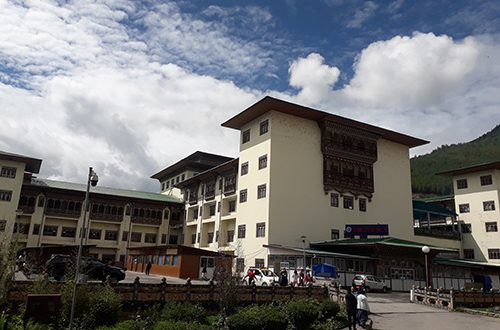
In Bhutan, the vital intersection between healthcare and justice is gaining institutional recognition through recent efforts to professionalize forensic services. At the forefront of this development is the Department of Forensic Medicine and Toxicology at Jigme Dorji Wangchuck National Referral Hospital (JDWNRH), which is spearheading a national initiative to strengthen the role of healthcare professionals in forensic medicine.
Forensic medicine, by definition, involves the application of medical knowledge to legal issues.
In Bhutan, this includes a range of responsibilities such as examining survivors of any form of violence, issuing medicolegal certificates for assault victims, estimating age in legal contexts, performing autopsies for unnatural deaths, and providing expert testimony in court of law.
Currently, the specialized forensic services in Bhutan have so far been largely centralized, with the Department of Forensic Medicine and Toxicology based at JDWNRH in Thimphu.
Only basic forensic services were provided at all health centers across the country.
Forensic expert, Dr Gyan Gurung from JDWNRH said that in peripheral health centers, in absence of specialized personnel, general medical doctors have been shouldering forensic responsibilities in addition to their other clinical duties.
While regional referral hospitals in Mongar and Gelephu have dedicated forensic units, they currently lack forensic specialists.
Dr Gurung said that forensic cases particularly those involving death investigations, sexual violence, child abuse, or traffic accidents require careful handling and dedicated time, which further adds workloads to the medical doctors.
He said, “Our doctors are trained abroad with varying exposure to forensic practices, and this has affected the uniformity of service delivery nationwide.”
To address these gaps, various capacity building activities are being conducted for all the medical officers.
Dr Gurung further said, “With the support from UNFPA, our department has trained at least one medical officer from each hospital across the country with regard to management of survivors of gender-based violence and sexual violence.”
Another major initiative undertaken by the department is appointment of a Forensic Medicine Focal Person (FMFP) at every hospital in Bhutan, a major step toward standardization and improved coordination with law enforcement and the judiciary.
The focal person will act as vital links between clinicians, the Royal Bhutan Police (RBP), and the Judiciary, ensuring that medicolegal documentation is timely, accurate, and legally sound.
These focal persons will be provided with annual Continuing Medical Education (CME) program that seeks to train healthcare workers in core forensic competencies. They primarily consist of staff nurses and public health professionals from 56 health centers across the country.
The CME aims not only to boost clinical competencies in forensic reporting but also to introduce standard operating procedures (SOPs) and improve inter-agency collaboration between different stakeholders.
Moving forward, the Department of Forensic Medicine and Toxicology is working to incorporate various topics of Forensic medicine in the Diploma course of community health, by which the health assistant will be equipped with knowledge and skills in delivering forensic services when they graduate.
Further, the department is working on building a network of trained focal persons, and develop national guidelines that every hospital can follow. These reforms are designed to strengthen the credibility, consistency, and accountability of forensic services in Bhutan.