The Bhutanese Leading the way.

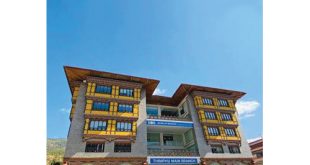
The Wangsel Institute for the Deaf, located in Paro within the premises of Drukgyel Lower Secondary School, has been providing education to students who are hard of hearing since its establishment in 2003.
What makes this institute unique is its inclusive approach, beyond educating students with hearing impairments, it also supports those with additional disabilities.
Students with multiple disabilities are those who have two or more co-occurring impairments, such as a combination of hearing loss with intellectual, physical, or learning disabilities.
These students often require specialized educational strategies and additional support, which many schools are not fully equipped to provide. Recognizing this gap, Wangsel Institute has positioned itself as an inclusive school that goes beyond just access, striving to ensure meaningful participation and learning for every child, regardless of their ability level.
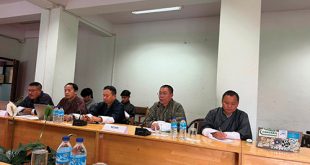
During a recent school visit organized by the Disabled People’s Organization of Bhutan, The Bhutanese met with Sonam Choden, the school’s Inclusive Education Coordinator, who shared various initiatives being carried out to make education more inclusive and responsive to students’ diverse needs.
To demonstrate how inclusion works in practice, Sonam Choden invited Kinley Dema, a 15-year-old Class VI student who is deaf and also has learning disabilities, to present alongside her.
“Kinley has deafness along with learning disabilities. Just like deafness, learning disabilities are also invisible, and often misunderstood,” Sonam said.
She further said, “For students like Kinley, we pull them out of their classes for key subjects and give them extra support. We usually take about three periods, arranged with a Special Educational Needs (SEN) teacher, so they can better understand the lessons along with the lessons taught by their subject teachers.”
To monitor progress, the school has also implemented an Individual Performance Assessment plan to help students with hearing impairments and additional disabilities. “For this, we set achievable goals based on each student’s level and needs. These goals are meaningful and measurable so we can track their improvement,” Sonam said.
She emphasized that these efforts, combining regular classroom exposure with targeted pull-out sessions, are helping students with multiple disabilities participate more effectively in school.
Kinley’s subject teacher from last year who is also involved in this year’s term as a SEN teacher explains how her academic plan is developed based on her performance in both term one and term two.
“In Kinley’s case, she struggles with reading and writing. Keeping her only in regular classes would not help her, it would waste her potential,” she said. “So, I decided to bring her into the Special Education Needs (SEN) division for more focused support.”
The teacher recalled that in the beginning, Kinley felt shy when she was separated from her peers and given one-on-one attention. “I comforted her by saying that if she stayed only with children who could perform better academically, she would be left behind,” the teacher said.
She added that this reassurance helped Kinley return to the SEN division while still attending her regular classes, and now, she is no longer shy.
Sonam Choden said there are currently 111 students with disabilities enrolled in the school. “Among the total, we have identified 13 students with additional disabilities who are receiving extra support under the SEN division,” she said.
Kinley’s class teacher mentioned that there are eight students with multiple disabilities in his class, including Kinley, and that the school’s inclusive practices have made a visible difference in their confidence and academic progress.
He said, “Each class has a maximum of 10 students, unlike mainstream classes that have 30 to 35. This smaller size allows for more focused and personalized support.”
At Wangsel Institute, inclusion is lived every day through patient teaching, compassion, and the belief that every child has potential.