The Bhutanese Leading the way.
Bhutanese society has always been mobile, with people moving, for shorter and longer periods, for trade and livelihoods, pastoralism, pilgrimage, and other reasons. However, what is different today is the growing influence of climate change on migration decisions. Yet, our academic and policy approaches have yet to fully acknowledge this shift.
While internal migrants generally point to education, employment, and new aspirations as reasons for their migration, many also refer to diminishing agricultural returns, erratic rainfall patterns and water scarcity, the emergence of new diseases and pests, and escalating conflicts between humans and wildlife in origin places. These issues are both directly and indirectly linked to climate and ecological crises, which are putting new pressures on the resilience of rural communities. As climate change in Bhutan intensifies, it is anticipated that its impacts will increasingly play a part in complex migration decisions.
In broad strokes, there are two ways in which the government may approach migration in the climate change context. The traditional approach aims to reduce out-migration by strengthening local livelihoods so that people remain in their places of origin. This approach translates to policy interventions to improve agriculture and land-management, infrastructure development, the expansion of government services to remote areas, and other strategies to promote local development and well-being. In this view, migration is seen as a negative outcome prompting policies to avert it. In Bhutan, this debate is dominated by rising concerns about gungtong and rural depopulation. There are of course good reasons for this governmental approach.
However, an alternative approach treats migration not primarily as a problem, but sees it as part of a multilayered pathway towards achieving transformative adaptation to climate change. For instance, migration may be the most effective way to enable people to diversify their income and build resilience where environmental change threatens livelihoods. Globally, scholars and practitioners in this field explore the conditions under which migration can turn into a successful adaptation to climate change by reducing precarity, building adaptive capacity, and promoting well-being for both migrants and stayers. They focus on conditions and narratives under which migration becomes part of the solution of climate change adaptation, even if in complex ways.
The consortium project Successful Intervention Pathways for Migration as Adaptation (SUCCESS), funded through the Climate Adaptation and Resilience Initiative (CLARE) and facilitated by the International Centre for Integrated Mountain Development (ICIMOD), explores the relevance and potential of ‘migration as adaptation’ approaches for the context of Bhutan. Transcending narrow approaches of ‘migration as a problem,’ this project posed the question, ‘How can migration become part of an integrated approach to securing successful adaptation to climate change?’ It adopted the concepts of ‘precarity’, ‘adaptive capacity’, and ‘well-being’ as entry points and trade-offs to evaluate migration as an adaptation strategy. To research this, surveys, qualitative fieldwork, and foresight exercises were variously carried out in two origin places in Samtse and Lhuentse and in two destinations, namely Thimphu and Pasakha. The research focused on low-income migrants and their families in places of origin.
We found that migration allows families to diversify their income sources which often helps them to offset increasing agricultural uncertainty. Even modest remittances provide an important buffer during crop failures. There are also social remittances in which new ideas, investments, and social capital is transferred from migrants to their communities of origin, as well as ‘ritual remittances’ in which migrants co-finance rituals and festivals in their origin communities, even as this does not absolve the absence of people to conduct these effectively. For many households, migration is a pathway to resilience.
At the same time, trends of rural out-migration place strains on community vitality and challenges the present and future ability of rural communities to act in conditions of continuing climate change. Migration is leaving behind ageing populations, labour shortages, and weakening social cohesion. Communities that once relied on shared labour and strong social networks are finding it harder to sustain agricultural systems and collective community practices. Fallow land is increasing. The burden on those who remain, particularly the elderly and women, is increasing. Social capital, long a cornerstone of resilience in Bhutanese villages, is gradually eroding.
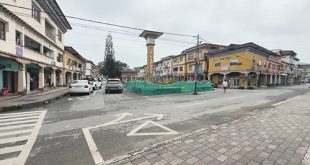
In urban and industrial areas, low-income migrants also face new forms of precarity. In Thimphu, migrants struggle to find affordable housing. In Pasakha, many migrants live in poor, makeshift housing compounded by exposure to heat, pollution, and vulnerability to ecological hazards, especially flooding. They usually accrue only limited savings that impede both their ability to remit remittances to their places of origin and to cope with financial or eco-climatic shocks. For many of them, their migration experience is not currently transformative, but involves a shifting from agrarian precarity in their places of origins to socio-ecological precarity in destinations.
This reality poses a policy dilemma. Migration can enhance adaptation to climate change, but it can also deepen and reproduce precarity. Migration can be a pathway for transformative climate change adaptation, but only if it is attuned to by policy interventions and frameworks. The question is no longer how to prevent migration. It is how to make it work as a climate change adaptation strategy.
What will it take to make migration a part of a broader and integrated climate change adaptation strategy?
First, migration needs to be integrated into national climate and development planning. Currently, the migration is not explicitly featured in the policies and planning. As it stands, migration and climate change are studied separately in Bhutan, with migration rarely appearing in climate reports and vice versa. The National Adaptation Plan mentions ‘migration’ just once, focusing on wildlife, with no reference to human migration. A government report on migration mentions climate change only once, linking it to urban sustainability goals. We require knowledge-making that connects migration, mobility and immobility to evaluations of climate change adaptation. Integrating migration in relation to climate indicators into national surveys would enable more informed and responsive policymaking.
Second, rural resilience must be strengthened, not necessarily to prevent migration, but to ensure it remains a choice rather than a necessity. This includes promoting climate-resilient agriculture, improving irrigation, addressing human-wildlife conflict, and finding productive uses for fallow land. Labour-saving technologies and land-leasing arrangements can help address workforce shortages while creating opportunities for youth to remain engaged in agriculture in new ways.
Third, conditions in destination areas must improve. Affordable housing, better sanitation, and stronger labour protections are critical. Migrants should not have to escape rural hardship to face urban insecurity.
Fourth, policy must address inequality within migrant groups. Experiences differ across gender, age, and income levels. Women, particularly in industrial areas, face distinct challenges related to safety, sanitation, and social stigma. At the same time, elderly people left behind in rural communities require targeted support.
Fifth, Civil Society Organisations (CSOs) can play a vital role in complementing government efforts. Already, some CSOs are engaged in supporting sanitation for vulnerable urban populations, as well as climate adaptation, climate-resilient agriculture, and human-wildlife conflict mitigation in rural areas. Strengthening partnerships with these organisations can make policies more effective by combining government capacity with local knowledge and flexibility.
Sixth, rural resilience significantly depends on government and community interventions to 1) mitigate escalating human-wildlife conflicts, and 2) address the problem of fallow lands to ensure that agrarian livelihoods remain sustainable.
As climate change reshapes Bhutan’s landscapes and livelihoods, migration will continue. The choice lies in how we respond. There is an urgent need for urban policies that reduce climate risks and ensure marginalised migrant populations have access to essential services and economic opportunities. At the same time, governmental and non-governmental agencies, including academia, must play a key role in bolstering rural lives and livelihoods as climate change impacts escalate. This would enable migration to always be a choice, for better opportunities, rather than a necessity, for survival
SUCCESS, Bhutan,
Research & Development Unit,
Royal Thimphu College.