The Bhutanese Leading the way.

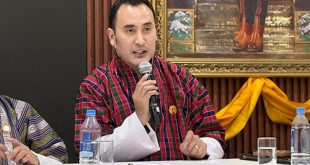
During the Question-Hour, Member of Parliament (MP) of Dewathang–Gomdar constituency, Tshering Penjor, raised concerns over the severe land constraints facing Samdrup Jongkhar Thromde due to extensive institutional land holdings.
He questioned the Minister for Infrastructure and Transport on whether the government would consider consolidating institutional facilities and supporting the thromde’s expansion to address mounting development pressures.
MP said that Samdrup Jongkhar, one of the smallest Thromde in the country, spans just 4.47 sq km, divided into six constituencies and home to 12,123 residents. Within this already limited area, substantial land parcels are occupied by major institutions including four locations used by the Royal Bhutan Army and IMTRAT, three separate Royal Bhutan Police establishments, and three areas under Project DANTAK.
He highlighted that these scattered institutional holdings significantly fragment the urban landscape, leaving the thromde with minimal usable land for housing, public amenities, economic activities, and future expansion.
He argued that consolidating each of the three major institutions into integrated campuses could free land from six existing sites, enabling reallocation for urban development as outlined in the Local Area Plan (LAP).
Further, he said that the thromde’s current boundary toward Dewathang limits growth opportunities. He suggested to Phuntsho Rabtenling (Motanga) Industrial Park as a more feasible direction for expansion, offering greater potential for residential, economic, and infrastructure development.
In response, Lyonpo Chandra Bdr Gurung explained that the development of Samdrup Jongkhar Thromde is guided by the 2013 Structure Plan and its subsequent LAPs, which cover both Samdrup Jongkhar and Dewathang towns.
He acknowledged concerns over the large areas under institutional use but emphasized that these facilities play vital functional and administrative roles that support the town, dzongkhag, and nation.
Lyonpo informed the House that Samdrup Jongkhar Thromde has already initiated bilateral discussions with the concerned agencies to determine actual land requirements and explore possible rationalization.
Thromde has also begun a preliminary review of the existing structure plan.
Lyonpo said that the ministry would fully support the thromde in reviewing the plan and assessing land availability. Should land scarcity be identified as a critical issue affecting infrastructure and urban growth, the ministry would work closely with the thromde and the National Land Commission Secretariat (NLCS) to determine land demand and negotiate the rationalization of institutional land holdings.
On the question of boundary expansion, the Minister explained that two parameters must be considered, the planning boundary, which can expand to include peri-urban areas based on development pressure, and the administrative boundary, which affects constituency delimitation.
He said that the thromde has already conducted a preliminary proposal for expansion, which requires further refinement and stakeholder consultations before submission for approval.