The Bhutanese Leading the way.
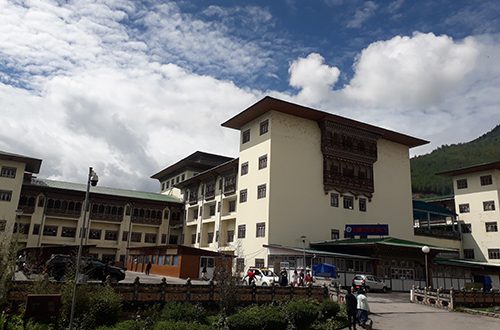
People struggling with dependence on opioids such as Spasmo Proxyvon Plus (SP+) and heroin, commonly known as brown sugar, can seek free and confidential treatment through Opioid Substitution Therapy (OST) at Jigme Dorji Wangchuck National Referral Hospital (JDWNRH).
Opioids are a group of drugs that act on the brain and body. While some are used medically to relieve pain, others, such as heroin, are illicit drugs. Repeated use can lead to dependence, making it difficult for a person to stop using them without medical support.
For people who have developed opioid dependence, treatment is available without having to wait until they are caught by police or referred for treatment. They can voluntarily approach the Psychiatric Department/PEMA Centre at JDWNRH and seek help.
The Head of the Psychiatric Department/ The PEMA Centre, Dr Ngawang Samten, said people seeking help can choose between accessing services through the Psychiatric Department or going to The PEMA Rehabilitation Centre for assessment and treatment.
“Those who voluntarily seek help have a choice of accessing services through the Psychiatric Department or going to The PEMA Rehabilitation Centre for assessment and treatment,” he said.
Previously, people using illegal substances who were caught by police were referred to The PEMA Rehabilitation Centre for treatment.
“The current system also allows people to come forward voluntarily and seek help,” he added.
This provides people experiencing opioid dependence an opportunity to seek treatment before their dependence leads to further health, social or legal problems.
A treatment option that has been available for a decade
OST was introduced in Bhutan in August 2016 to address opioid dependence, particularly among young and economically productive people.
The program provides medically supervised treatment using buprenorphine, alongside counselling and other support, to help people manage opioid dependence, reduce withdrawal symptoms and minimise the harms associated with opioid use.
OST is an evidence-based harm-reduction intervention. International evidence shows that opioid substitution treatment can reduce illicit opioid use and help improve health and social functioning.
The program can also help reduce health risks associated with opioid use, including HIV, hepatitis C and overdose.
Globally, medicines including methadone, buprenorphine and naltrexone are used in the treatment of opioid use disorder. Buprenorphine is the medication provided through Bhutan’s OST program.
How does OST work?
Under OST, participants are prescribed buprenorphine, which is taken sublingually, or under the tongue, under medical supervision.
Buprenorphine helps manage opioid withdrawal and cravings and can reduce the risk of relapse. It is also used internationally as a medication for opioid dependence and is commonly administered sublingually.
Dr Ngawang said intake and assessment are available through the service. Before beginning treatment, participants are required to sign an agreement outlining the conditions of the programme, including confidentiality.
“First, they have to sign an agreement, where we keep the individual’s identity confidential,” he said.
The service is provided free of charge, with around 37 people currently accessing OST.
The OST clinic is conducted every Wednesday, with participants attending sessions from 12 noon to 1pm according to the program schedule. Dr Ngawang said one group completes its session cycle over four months.
The program is supported by a multidisciplinary team comprising psychiatrists, clinical counsellors, pharmacists and peer counsellors.
The treatment also forms part of a broader pathway of care.
According to Dr Ngawang, treatment can begin with detoxification, which takes an average of one week, followed by rehabilitation lasting around three to five months. Rehabilitation can be undertaken at the individual’s residence or through hospital-based services, followed by recovery and aftercare.
Participants who complete the OST group sessions are also provided with a certificate recognising their participation.
Breaking the cycle of dependence
Dr Ngawang said people currently seeking OST are predominantly between 25 and 50 years old, with the average age in the late 30s.
“The ones seeking help are at the functional stage of their life, mostly working,” he said.
People receiving OST come from diverse occupational backgrounds, with many continuing to work while undergoing treatment.
“The service is predominantly accessed by men,” he said.
Younger people generally come to seek help after being brought by their parents.
He said that before OST was available, people dependent on opioids often lived with the constant fear of being caught while obtaining drugs through illegal means.
“In the past, because they are dependent, to get those drugs such as SP and heroin, they have to remain in constant fear of being caught through importing and exporting illegally,” he said.
The financial burden of sustaining opioid use could also affect people’s livelihoods, he said, with some resorting to selling drugs to finance their own consumption. “Most of them cannot maintain their lifestyle. In a way, to consume these drugs, they have to buy, and in a way they also become dealers to maintain their financial assistance,” he said.
OST provides a medically supervised alternative to this cycle, allowing people to address their dependence while continuing with their daily lives.
Dr Ngawang said withdrawal from opioids such as SP+ and heroin can cause severe symptoms, including body pain, watery eyes, a runny nose and diarrhoea. Buprenorphine can help manage these withdrawal symptoms in a safer and more controlled manner.
He said the purpose of the program is harm reduction, while supporting people towards reducing or eventually stopping their dependence when they are ready.
“This is for harm minimization. The goal is, when they are ready to quit, this can also help them to quit depending on opioids such as heroin and SP,” he said.
Treatment rather than waiting for a crisis
The availability of voluntary treatment means people experiencing opioid dependence can seek help without waiting until they are identified by police.
Dr Ngawang said people undergoing OST are also able to explain a positive urine test by showing that they are receiving treatment. “Even if the police catch them through a urine-positive test, they have a justification that they are taking treatment,” he said.
However, the legal implications of a positive urine test for a person enrolled in OST would need to be clarified by the relevant authorities.
The program also has conditions. Dr Ngawang said three people have previously had their treatment terminated after breaching the agreement, including by sharing their prescribed medication with others or selling buprenorphine provided by the hospital.
At present, OST is available only in Thimphu, although plans are underway to expand the service to border towns.
For people dependent on opioids, seeking help does not have to begin with a police referral, a health crisis or the consequences of continued illegal drug use.
A free and confidential treatment option is already available through the PEMA Centre at JDWNRH, where people can voluntarily seek assessment, medication, counselling and support towards recovery.
If you or someone you know is experiencing mental distress, substance dependence or abuse, help is available 24/7 through The PEMA.
Call the helpline at 1098, email helpline@pema.gov.bt, or call or text 17123239 for support.