The Bhutanese Leading the way.
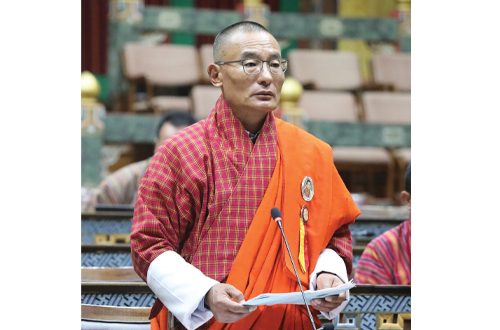
The Thrimshing-Kangpara MP Damche Tenzin asked a question on measures by the government to reduce government fuel expenditure through use of electric vehicles and restriction of government vehicle usage.
The MP said the Prime Minister, during the press release on 16th May 2026, informed the public about the growing fuel crisis and the rising financial burden caused by increasing fuel prices in the international market.
He said Bhutan currently has 5,937 BG fuel vehicles, out of which 327 are in Thimphu. Civil servants in EX-3 and above (127 civil servants) are provided with designated duty vehicles. The 127 civil servants do not include employees of autonomous agencies and constitutional bodies.
As the average fuel and maintenance cost for each vehicle is estimated to be Nu. 300,000 per year, the annual expenditure on designated duty vehicles alone amounts to a substantial figure, which is a huge financial cost to the national exchequer.
Currently, there are 131 government electric vehicles (BG EVs).
He asked if the government will consider deploying these EVs to designated officials in Thimphu and keeping the fuel-run government vehicles as pool vehicles, can government officials pool vehicles while travelling to Dzongkhags and regions for meetings and conferences as a temporary measure to overcome the present fuel crisis and stricter restriction on the use of government vehicles.
The Prime Minister Dasho Tshering Tobgay said EVs will be used as vehicles for government officials and ministries will start using them as designated vehicles.
Procurement of 99 additional electric vehicles is currently underway, to be allocated for both designated and pool use based on operational requirements.
45 electric buses are being procured and will be deployed to expand public transportation and reduce diesel dependence.
Vehicle pooling is being actively encouraged, particularly for official travel to Dzongkhags and regions for meetings and conferences.
Walk-from-home and remote working arrangements are to be further initiated and strengthened.
The PM said the government reiterates its call to the public to minimize fuel consumption and adopt healthier alternatives such as walking, cycling, and using public transport
He said the government has made it necessary for designated vehicles to be EV.
The Opposition Leader Dasho Pema Chewang expressed support and noted this could be an opportunity for Bhutan. He raised a concern that while EVs are the way forward, EV loans carry high interest rates which need to be addressed.
The MP Radhi-Sakteng Tashi Tenzin said that current measures are short-term and temporary relief and flagged that oil company distributors are being asked to absorb losses during such situations, which is not a sustainable arrangement. He called for more comprehensive long-term solutions.
The PM confirmed that EVs will be deployed for government officials, and ministries will begin transitioning to electric vehicles.
He informed the House that the National Energy Security Policy and Strategy has been formulated and was received by him.
Lyonchhen emphasized that Bhutan’s energy future can and should be achieved through electricity, leveraging the country’s hydropower advantage and reiterated that Bhutan has a distinct competitive advantage in electricity and must fully leverage this.
He said the government is committed to exploring how government vehicles can be progressively converted to electric and will also explore the use of electric construction machinery, including excavators, to reduce diesel dependence in the construction sector.
The Prime Minister said the government is deeply grateful for the continued support from India in supplying fuel, even during periods when India itself faced shortages.
He said His Majesty the King provided directives and guidance to the government to safeguard fuel prices and protect the people from the impact of the global fuel crisis.