The Bhutanese Leading the way.
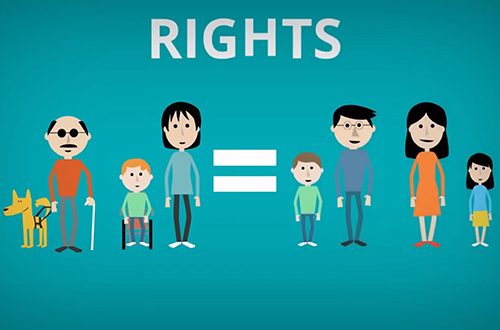
Last year, the National Assembly (NA) adopted the Amendment to the Reservation on the Convention on the Rights of Persons with Disabilities (CRPD) during the 7th Sitting of the Fourth Parliament, following objections raised by 11 countries to Bhutan’s reservations on certain provisions of the Convention.
The reservations of the Social and Cultural Affairs Committee (SCAC) on the CRPD amendments was presented to the House by the Foreign Minister for consideration.
The CRPD is an international human rights treaty aimed at promoting, protecting, and ensuring the full and equal enjoyment of all human rights and fundamental freedoms by persons with disabilities (PWDs).
Bhutan ratified the Convention during the previous government’s term, entering reservations on Articles 18(1) (a), 18(2), 23(1) (b), 23(1) (c), 27(1) (c), and 29(a) (ii), and the instrument of ratification along with the reservations was submitted to the United Nations on 13th March 2024.
The revised amendments were adopted unanimously by the NA and were subsequently forwarded to the National Council for review before being submitted to the United Nations.
During the ongoing 12th Sitting of the National Council, the report on the CRPD amendments carried by the SCAC was presented for deliberation, however it did not receive the support of the majority of members as concerns were raised over legal interpretation and policy implications.
Members of Parliament (MPs) of NC particularly objected to the SCAC’s proposal to replace certain reservations with declarations, noting that the two carry different legal meanings in international law, where a reservation allows a state to accept a treaty while excluding or modifying the legal effect of specific provisions, whereas a declaration reflects a state’s interpretation or understanding without altering legal obligations.
Trashigang MP Sonam Tobgyal questioned the Foreign Minister on whether the submission process to the United Nations had been delayed, stating that procedural inconsistencies could lead to legal ambiguity.
He said, “This may lead to omissions, inconsistency with treaty law, and legal ambiguity.”
In response, the Foreign Minister maintained that the submissions were made in a timely manner and clarified that the earlier reservations were blanket reservations, which the United Nations had pointed out required greater specificity.
He added that the revised submissions provide detailed explanations for each provision, aligning Bhutan’s commitments with international disability rights standards while ensuring consistency with domestic laws and long-term inclusive development goals.
On Article 18 relating to liberty of movement and nationality for PWDs, the committee recommended replacing the reservation with a declaration stating, “The Kingdom of Bhutan declares that persons with disabilities have the right to liberty of movement, freedom to choose their residence and to a nationality, on an equal basis with others, in line with the citizenship laws and naturalization process in Bhutan.”
However, several MPs, NC suggested that the wording should explicitly be in line with the Constitution of Bhutan to strengthen its legal basis.
Similarly, Zhemgang MP Tshering Tshomo questioned the shift from reservation to declaration, stating that it could create confusion in interpretation and weaken legal clarity. She said, “This only creates confusion and may be misused in interpretation, and it could even put the country’s sovereignty at risk.”
With regard to Article 23 1(b) and (c) on respect for home and family life, which guarantees persons with disabilities the right to decide freely and responsibly on the number and spacing of children, access to reproductive and family planning information, and the right to retain fertility on an equal basis with others, the SCAC recommended withdrawing the reservation on paragraph (1)(b) and (c), stating that, “The reservation applies a blanket assumption that all persons with disabilities lack decision-making capacity in matters of family and reproduction. However, these concerns lack substantiation in law, policy, or empirical evidence.”
However, several MPs questioned whether the recommendations comes with legal findings or reports.
In response, Gasa MP Tshering, a member of the SCAC stated that findings from relevant agencies, including the Ministry of Health, do not support the assumption that disability is generally hereditary. He said, “In most cases, persons with disabilities are fully capable of raising and caring for their children.”
The committee further noted that scientific evidence indicates most disabilities are not hereditary, and where risks exist, appropriate counselling enables informed reproductive choices.
Similarly, on Article 27 relating to work and employment, which guarantees equal labour and trade union rights for persons with disabilities, the SCAC recommended replacing the reservation with a declaration stating, “The Kingdom of Bhutan declares that persons with disabilities shall enjoy their labour rights on an equal basis with others, in accordance with the Constitution of the Kingdom of Bhutan, the Labour and Employment Act of Bhutan and other relevant domestic laws.”
However, the Samtse Dzongkhag MP Tashi Dhendup raised concerns over implementation, questioning how the employment status of persons with disabilities would be monitored and which authority would be responsible.
The Mongar MP also questioned the use of the term “declaration” instead of “reservation.”
In response, Gasa MP Tshering stated that monitoring responsibilities would rest with relevant agencies, including the Ministry of Industry, Commerce and Employment, in coordination with other stakeholders.
On Article 29 concerning participation in political and public life, which guarantees the right of persons with disabilities to vote, stand for elections, and participate in public life, the SCAC recommended replacing the reservation with a declaration stating, “The Kingdom of Bhutan shall implement article 29(a) (ii) of the Convention in conjunction with the electoral and other relevant domestic laws.”
The SCAC clarified that Bhutan’s position aligns with electoral laws, which restrict voting and candidature rights for individuals legally declared mentally incompetent by a court.
However, most National Council members argued that individuals declared mentally unsound are not in a position to make informed political decisions. In this regard, Samdrupjongkhar MP Tshewang Rinchen said, “There is no need for a new recommendation under this provision. Apart from those under monastic provisions in the law, all citizens are eligible to participate in political processes. However, individuals who are medically or legally declared mentally unsound cannot make such decisions, and this is already well established.”
Ultimately, the National Council did not adopt the recommendations of the SCAC. Article 18 has been referred back to the committee for further review, while the remaining provisions will remain unchanged as per the 2024 reservations, and the Convention along with the committee’s revised recommendations is scheduled for further consideration on 9th June.